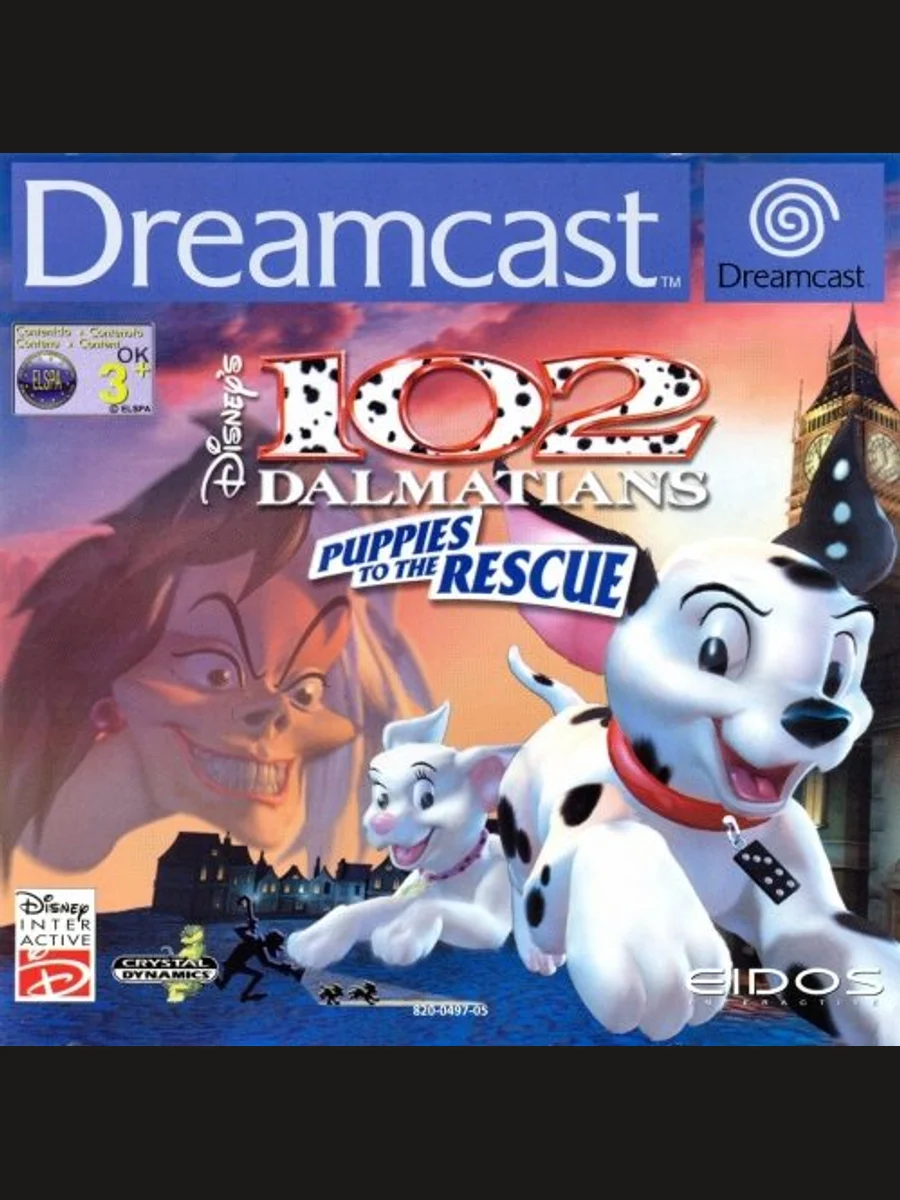
102 Dalmatians: Puppies to the Rescue is a 2000 platform game, loosely based on the 2000 film 102 Dalmatians. It was developed by Toys for Bob and published by Eidos Interactive for PlayStation and Dreamcast while Disney Interactive published the Windows version. The Game Boy Color version was developed by Digital Eclipse and published by Activision.
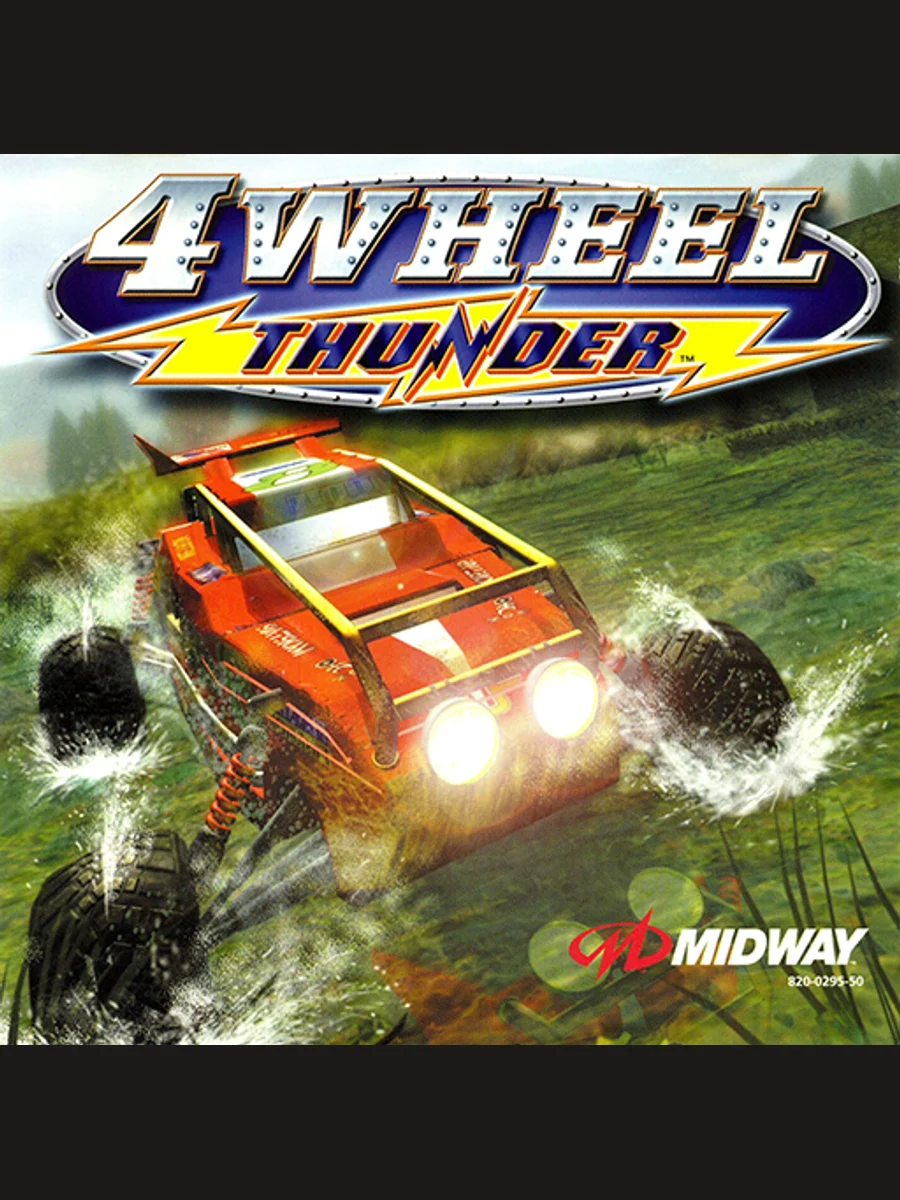
4 Wheel Thunder is a 2000 racing game developed by Kalisto Entertainment and published by Midway for the Dreamcast. While the game had been in development for some time prior as a separate title, it was eventually decided to rebrand the game into Midway's Thunder series. The game received generally favorable reviews.
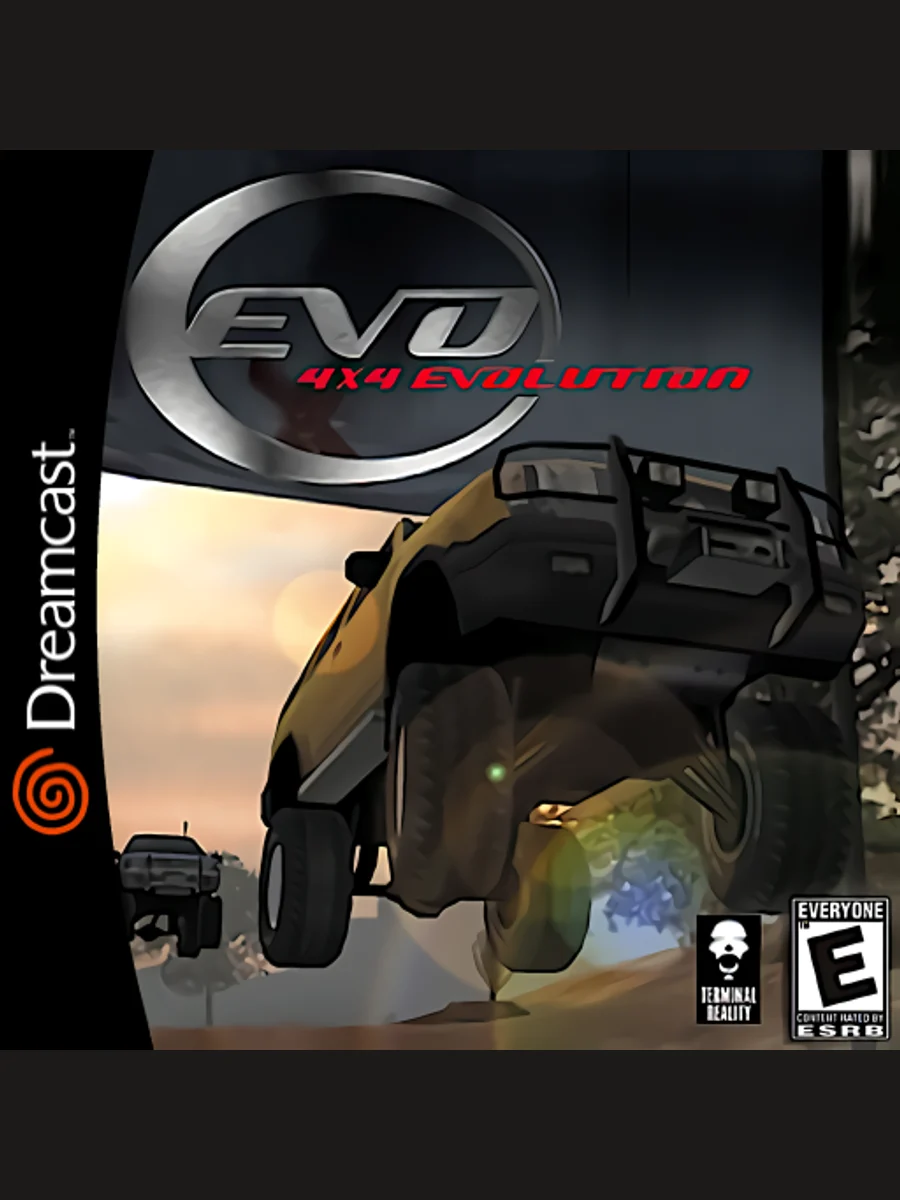
4x4 Evo is a video game developed by Terminal Reality for the Windows, Macintosh, Sega Dreamcast, and PlayStation 2 platforms. It is one of the first console games to have cross-platform online play where Dreamcast, Macintosh, and Windows versions of the game appear online at the same time. The game can use maps created by users to download onto a hard drive as well as a Dreamcast VMU. All versions of the game are similar in quality and gameplay although the online systems feature a mode to customize the players' own truck and use it online. The game is still online-capable on all systems except for PlayStation 2. This was Terminal Reality's only video game to be released for the Dreamcast.
The atmosphere of Earth consists of a layer of mixed gas that is retained by gravity, surrounding the Earth's surface. It contains variable quantities of suspended aerosols and particulates that create weather features such as clouds and hazes. The atmosphere serves as a protective buffer between the Earth's surface and outer space. It shields the surface from most meteoroids and ultraviolet solar radiation, reduces diurnal temperature variation – the temperature extremes between day and night, and keeps it warm through heat retention via the greenhouse effect. The atmosphere redistributes heat and moisture among different regions via air currents, and provides the chemical and climate conditions that allow life to exist and evolve on Earth.
The Dreamcast is a home video game console developed and sold by Sega. The first of the sixth generation of video game consoles, it was released in Japan on November 27, 1998, in North America on September 9, 1999, and in Europe on October 14, 1999. The fifth and final home console produced by Sega, the Dreamcast is the successor to the Sega Saturn, whose commercial failure prompted the company to release it only four years after its predecessor's initial release.
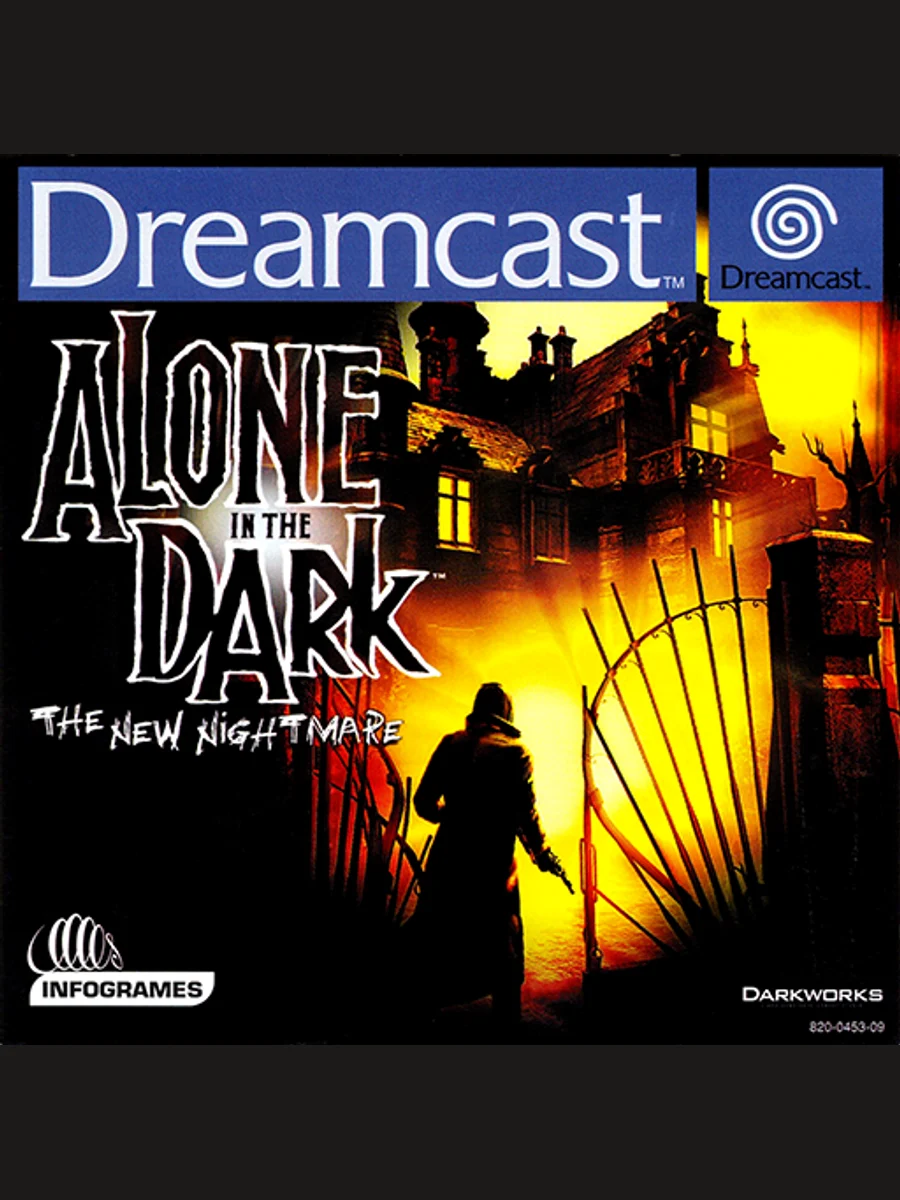
Alone in the Dark: The New Nightmare is a survival horror video game and the fourth installment and first reboot of the video game series Alone in the Dark, developed by Darkworks and published by Infogrames. The game was released in 2001 on Windows, PlayStation, Dreamcast, and Game Boy Color. A PlayStation 2 version of the game was also released several months after and only in Europe.
HuneX is a video game developer formed as a partnership between NEC Home Electronics, Ltd. and Human in 1992. HuneX mainly produces Bishōjo games and Otome games.
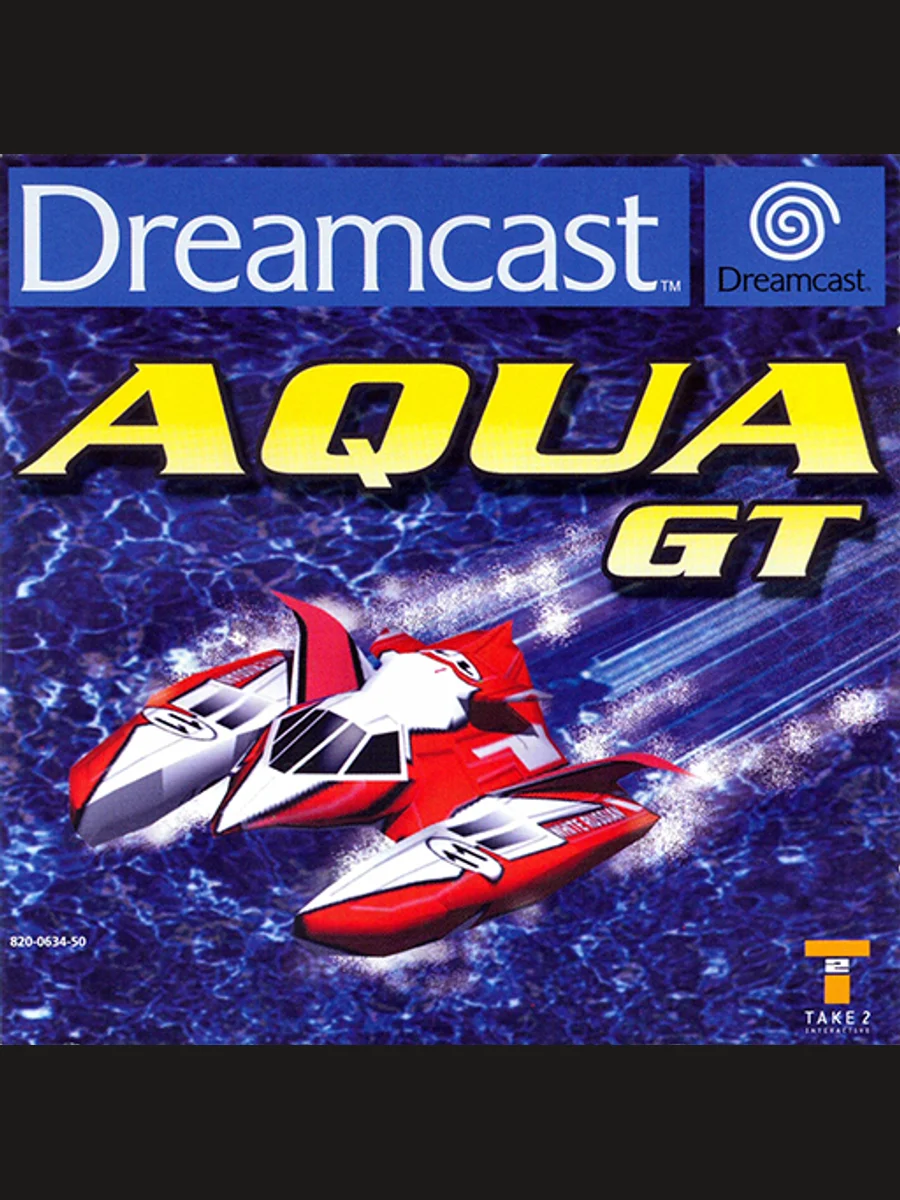
Aqua GT is an inshore powerboat racing video game developed by East Point Software and published by Take Two Interactive for the Dreamcast in 2000 and PlayStation in 2001. A PC release was previewed in PC Zone but this was not released.
The Dreamcast is a home video game console developed and sold by Sega. The first of the sixth generation of video game consoles, it was released in Japan on November 27, 1998, in North America on September 9, 1999, and in Europe on October 14, 1999. The fifth and final home console produced by Sega, the Dreamcast is the successor to the Sega Saturn, whose commercial failure prompted the company to release it only four years after its predecessor's initial release.
Baldr Force is a 2D action-shooter game and eroge visual novel with action and detailed sprite characters. The game features a world in the not-so-distant future where humans are able to dive into the network, and fight using humanoid tools called "Simulacrum".
Bang Bang Busters is a 2010 platform video game developed by Visco Corporation and originally published by Neo Conception International for the Neo Geo AES (home). Taking place on the fictional planet of Palua in the future, where an evil being known as Honey plots to have his own galaxy, players assume the role of Lazy and Refia in order to prevent Honey and his followers from realizing their plan. Its gameplay mainly consists of platforming mixed with action elements using a main two-button configuration.
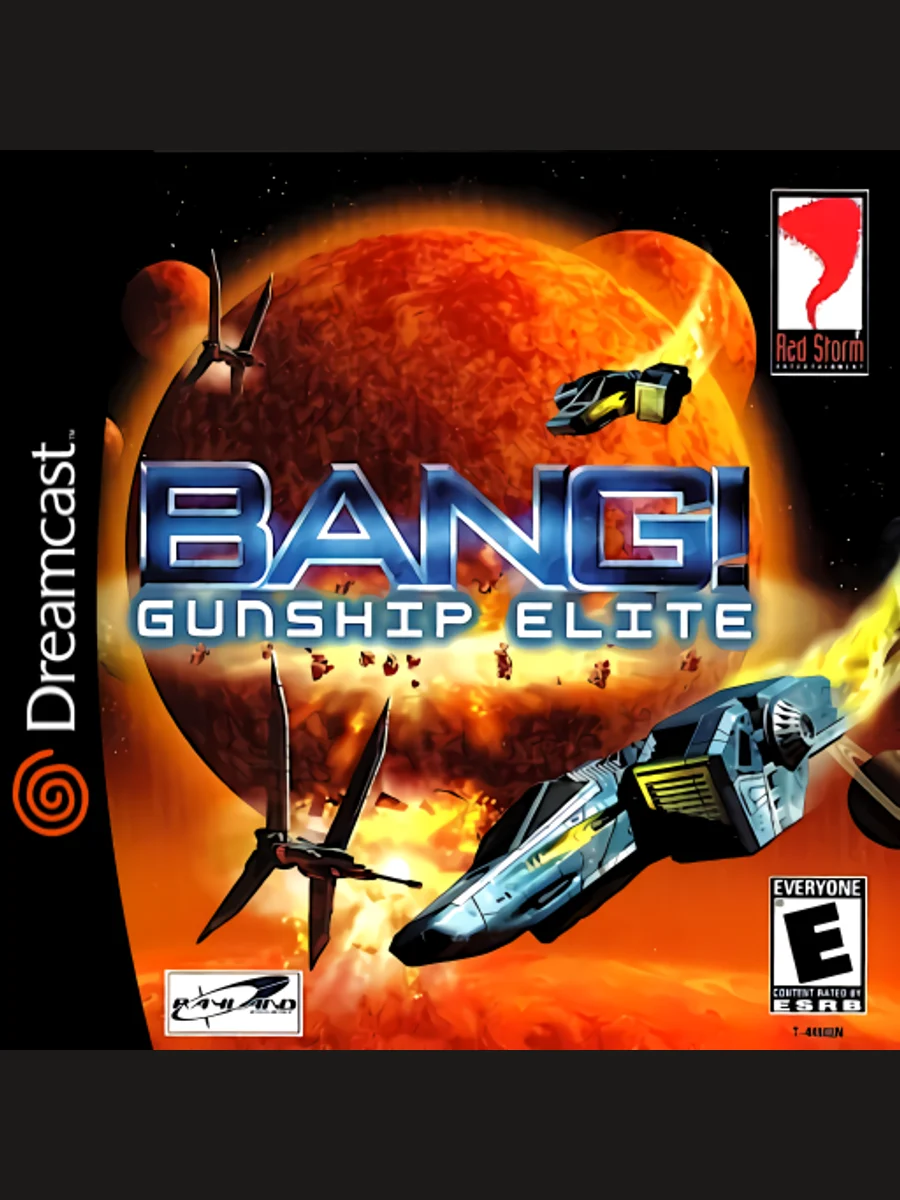
Bang! Gunship Elite is a space combat simulator developed by French studio RayLand was released for Windows and Dreamcast. It allows the player to fly a combat spacecraft in a fully 3D environment and fight enemies piloting similar craft to their own.
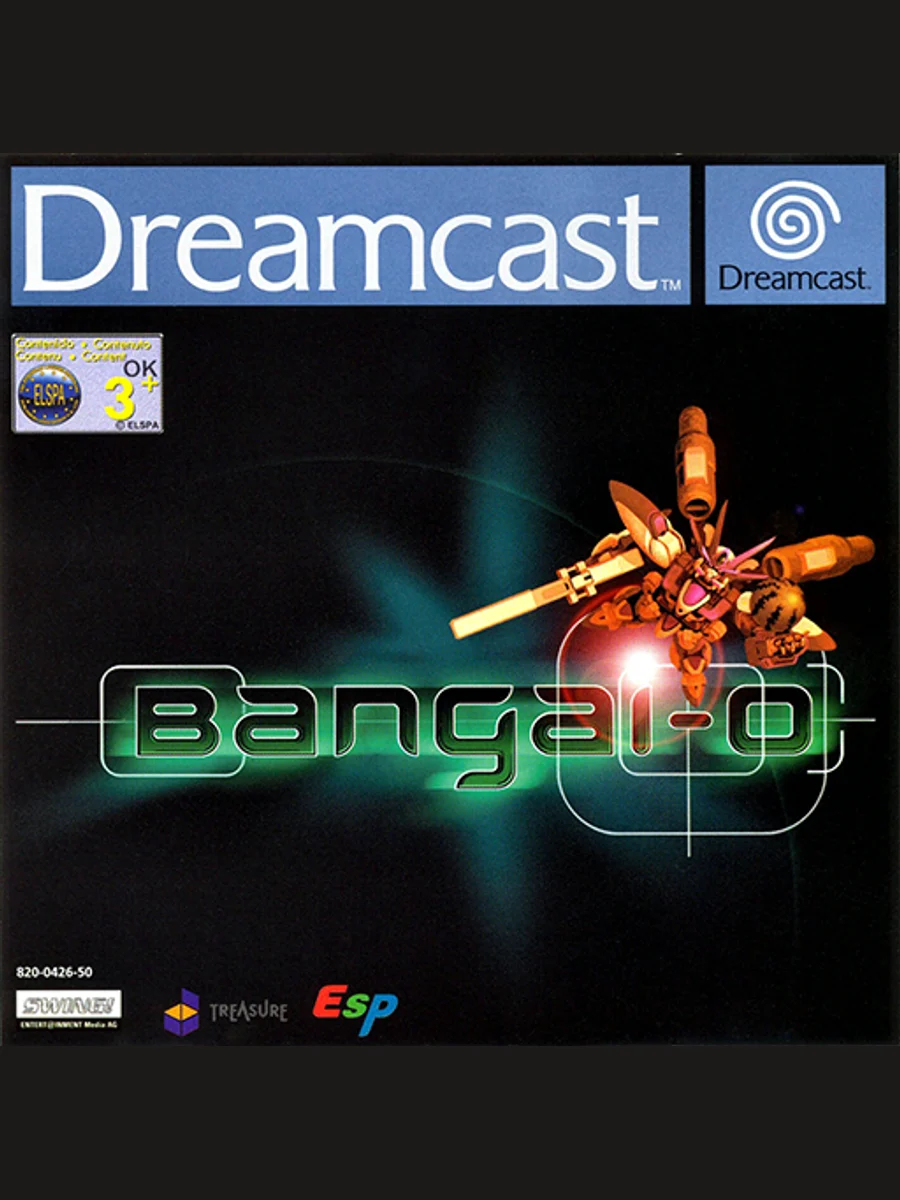
Bangai-O is a multidirectional shooter developed by Treasure and released in 1999 on the Nintendo 64 in Japan. It was ported to the Dreamcast worldwide shortly after with some gameplay changes and updated graphics and audio. The game places the player in control of a weaponized mech that can hover across large stages and fire at enemies all around them. The player must reach the end of each stage and defeat the boss, while avoiding hazards scattered across the map such as enemy mechs and gun turrets.
Black/Matrix Advanced est un jeu de rôle tactique développé par Flight-Plan et publié par NEC InterChannel sur Dreamcast et sorti le 30 septembre 1999 au Japon. Ce jeu est une adaptation de Black/Matrix sur Saturn avec des scènes supplémentaires.
Blue Stinger is a 1999 action-adventure game developed by Climax Graphics for the Dreamcast. It was published by Sega in Japan, and by Activision in Western territories as a console launch title. The story follows emergency rescuer Eliot Ballade after he is stranded on the monster-infested Dinosaur Island and allies with fellow survivors and the alien being Nephilim to find the source of the monsters. Gameplay has Eliot navigating Dinosaur Island, fighting monsters using various weapons found or purchased during the game, and finding items to progress to other areas.
The Dreamcast is a home video game console developed and sold by Sega. The first of the sixth generation of video game consoles, it was released in Japan on November 27, 1998, in North America on September 9, 1999, and in Europe on October 14, 1999. The fifth and final home console produced by Sega, the Dreamcast is the successor to the Sega Saturn, whose commercial failure prompted the company to release it only four years after its predecessor's initial release.
Bomberman Online is a multiplayer video game developed for the Dreamcast console platform. The game is part of the Bomberman franchise and includes various multiplayer game modes. The game's online servers were shut down in 2003, restricting players to offline-only multiplayer modes.
Breaker's (ブレイカーズ, en japonais) est un jeu vidéo de combat développé par Visco et édité par SNK en 1996 sur Neo-Geo MVS, Neo-Geo AES et sur Neo-Geo CD.
The Dreamcast is a home video game console developed and sold by Sega. The first of the sixth generation of video game consoles, it was released in Japan on November 27, 1998, in North America on September 9, 1999, and in Europe on October 14, 1999. The fifth and final home console produced by Sega, the Dreamcast is the successor to the Sega Saturn, whose commercial failure prompted the company to release it only four years after its predecessor's initial release.
Caesars Palace 2000 is a gambling simulation video game developed by Runecraft and published by Interplay Entertainment. It was released in North America and Europe in 2000 for the PlayStation, Dreamcast and Microsoft Windows' PCs. It is named after the famous Caesars Palace luxury hotel and casino on the Las Vegas Strip in Las Vegas, Nevada.
Cafe Little Wish is a Japanese adult visual novel developed by Patissier and released on February 14, 2003 for Windows. It was later ported to the Dreamcast and PlayStation 2 consoles by Princess Soft. The story follows Leon, an amnesiac who has to work off his debt to Cafe Little Wish, after he engulfs everything in the cafe without paying any money.
Capcom vs. SNK: Millennium Fight 2000, also known as simply Capcom vs. SNK in international releases, is a 2000 crossover fighting game developed and published by Capcom for arcades on Sega's NAOMI hardware and later ported to the Dreamcast. It is the second game in the SNK vs. Capcom series and the first game in the series to be released for the arcade.
Cave Story is a 2004 Metroidvania game for Microsoft Windows. It was developed over five years by Japanese independent developer Daisuke "Pixel" Amaya in his free time. Cave Story features 2D platform mechanics and is reminiscent of the games Amaya played in his youth, such as Metroid and Castlevania. After its initial self-published release, the game slowly gained popularity on the internet. It received widespread critical acclaim for many polished aspects of its design, such as its compelling characters, setting, story, and gameplay. Cave Story is considered by many as a quintessential indie game because of its one-person development team and influence on the video gaming world.
Centipedes are predatory arthropods belonging to the class Chilopoda of the subphylum Myriapoda, an arthropod group which includes millipedes and other multi-legged animals. Centipedes are elongated segmented (metameric) animals with one pair of legs per body segment. All centipedes are venomous and can inflict painful stings, injecting their venom through pincer-like appendages known as forcipules or toxicognaths, which are actually modified legs instead of fangs. Despite the name, no species of centipede has exactly 100 legs; the number of pairs of legs is an odd number that ranges from 15 pairs to 191 pairs. Less common names include "forty-legs" and "hundred-legs".
Championship Surfer is an extreme sports video game developed by Krome Studios, published by Mattel Interactive in North American and GAME Studios in Europe, and released for Microsoft Windows, PlayStation and Dreamcast in 2000.
Chaos Field is a 2004 vertically scrolling shooter arcade video game developed by MileStone. The game consists entirely of boss battles, featuring five stages with three bosses each. The player can choose to play as one of three characters, each with their own ship that has a unique primary weapon. The player can flip the environment at will between two parallel worlds.
The cherry blossom, or sakura, is the flower of trees in Prunus subgenus Cerasus. Sakura usually refers to flowers of ornamental cherry trees, such as cultivars of Prunus serrulata, not trees grown for their fruit. Cherry blossoms have been described as having a vanilla-like smell, which is mainly attributed to coumarin.
Chicken Run is a 2000 animated adventure comedy film directed by Peter Lord and Nick Park and written by Karey Kirkpatrick from an original story by Lord and Park, partly inspired by the 1963 film The Great Escape. Produced by Aardman Features in partnership with Pathé and DreamWorks Animation, it is Aardman's first feature-length film. The film stars the voices of Julia Sawalha, Mel Gibson, Tony Haygarth, Miranda Richardson, Phil Daniels, Lynn Ferguson, Timothy Spall, Imelda Staunton, and Benjamin Whitrow. Set in the countryside of Yorkshire, the film centres on a group of British anthropomorphic chickens in an egg farm who see an American rooster named Rocky Rhodes as their only hope to escape the farm when their owners want to turn them into chicken pies.
Hatsumei Boy Kanipan is a 1998 Japanese anime television series produced by NAS and TV Tokyo, animated by Studio Comet and sponsored by Sega. The series was inspired by the 1994 SNES game Robotrek, developed by Quintet. It was immediately followed by a second season titled Chō Hatsumei Boy Kanipan. In late 2000, Saban Entertainment licensed the series to air on Fox Kids in September 2001 but it did not air for unknown reasons.
ChuChu Rocket! is a 1999 action puzzle game developed by Sonic Team and published by Sega for the Dreamcast. The objective is for the player to place arrows on a board to lead mice into escape rockets while avoiding cats. The game features single-player modes in which a player must save all the mice on a board, and a multiplayer mode in which players battle to collect the most mice.
Cleopatra Fortune (クレオパトラフォーチュン), released in North America as Cleopatra's Fortune, is a 1995 arcade puzzle video game created by Taito in association with Natsume Co., Ltd.
Confidential Mission is a light gun game published by Sega, first available as an arcade game, then ported to the Dreamcast. The game is in the same style as the Virtua Cop series or The House of the Dead series, with support for one or two players. The game was developed by Sega's Hitmaker development team and first released in 2000. Its plot is of the same vein as James Bond and Mission: Impossible. Despite it also having an arcade release, it never enjoyed the popularity of the Virtua Cop nor The House of the Dead series, which were also produced by Sega.
Conflict Zone is a war-themed real-time strategy game, developed by MASA Group and published by Ubi Soft for Dreamcast, PlayStation 2, and Microsoft Windows. It was the final third-party game released for the Dreamcast in the US and was amongst the final five games overall released for the Dreamcast in PAL regions.
Cool Cool Toon is a 2000 rhythm video game developed and published by SNK for the Dreamcast. It was released only in Japan on August 10, 2000 alongside Cool Cool Jam, a companion game for the Neo Geo Pocket Color.
The Dreamcast is a home video game console developed and sold by Sega. The first of the sixth generation of video game consoles, it was released in Japan on November 27, 1998, in North America on September 9, 1999, and in Europe on October 14, 1999. The fifth and final home console produced by Sega, the Dreamcast is the successor to the Sega Saturn, whose commercial failure prompted the company to release it only four years after its predecessor's initial release.
Counter-Strike (CS) is a series of multiplayer tactical first-person shooter video games, in which opposing teams attempt to complete various objectives. The series began on Windows in 1999 with the release of the first game, Counter-Strike. It was initially released as a mod for Half-Life that was designed by Minh Le and Jess Cliffe before the rights to the mod's intellectual property were acquired by Valve, the developers of Half-Life, who then turned Counter-Strike into a retail product released in 2000.
Crazy Taxi is a series of racing games developed by Hitmaker and published by Sega. It was first available as an arcade video game in 1999, then released for the Dreamcast console in 2000. It is the third best-selling Dreamcast game in the United States, selling over a million copies. The game was later ported to the PlayStation 2, GameCube, and IBM PC compatibles with sequels also appearing on the Xbox, Game Boy Advance, and PlayStation Portable systems.
Crazy Taxi 2 is a 2001 racing video game and the second installment of the Crazy Taxi series. It was originally released for the Dreamcast, and was later ported to the PSP as part of Crazy Taxi: Fare Wars in 2007. It is the last Crazy Taxi game to be released for the Dreamcast after the console was discontinued in March 2001.
Cyber Troopers Virtual-On Oratorio Tangram is a 1998 arcade action game from Sega, a 3D fighting game where the player assumes control of a giant humanoid robot. It was developed initially on the Sega Model 3 arcade hardware. Updated versions (Ver.5.4/5.45) were ported to the Dreamcast home console in 1999 and to North American arcades in 2000. A third update (Ver.5.66) was developed on the NAOMI board in 2000 and was ported to the Xbox 360 in 2009. Oratorio Tangram is part of the Virtual On series and is the sequel to Virtual On: Cyber Troopers (1995); it was followed by the Japan-exclusive Cyber Troopers Virtual-On Force (2001).
Dance Dance Revolution 2ndMix , sometimes abbreviated as 2ndMix , is the second game in the Dance Dance Revolution series of music video games. It was released as an arcade game by Konami on January 29, 1999. The initial release has a total of 33 songs: 22 brand new songs, and 11 from its predecessor, Dance Dance Revolution.
The Dance Dance Revolution series started in 1998 and has grown to a large set of games in the franchise. This list of Dance Dance Revolution games documents games released, including systems, formats, and regions for which the games were released.
Jet Set Radio is a 2000 action-platform video game developed by Smilebit and published by Sega for the Dreamcast. The player controls a member of the GG's, a youth gang that uses inline skates to traverse Tokyo while spraying graffiti, challenging rival gangs, and evading authorities.
Dead or Alive 2 is a 1999 fighting game developed by Team Ninja and published by Tecmo for arcades. Initially only released in Japan, it was later released worldwide and was ported to the Dreamcast and PlayStation 2 home systems in 2000. It is the second main entry in the Dead or Alive fighting series following the original Dead or Alive (1996). Several enhanced editions of the game were released, including the updates Dead or Alive 2 Millennium for arcades and Dead or Alive 2 Hardcore or Dead or Alive 2 Hard*Core for the PS2.
Deep Fighter is a submarine simulator video game developed by Criterion Games and published by Ubi Soft. It was released for Dreamcast and Windows in 2000. The game has the player dog-fight enemies underwater whilst completing missions. The game contains cutscenes featuring actors, including David Walliams.
Demolition Racer is a 1999 vehicular combat racing video game for the PlayStation, Dreamcast, and Microsoft Windows, developed by British studio Pitbull Syndicate and published by Infogrames North America.
The Dreamcast is a home video game console developed and sold by Sega. The first of the sixth generation of video game consoles, it was released in Japan on November 27, 1998, in North America on September 9, 1999, and in Europe on October 14, 1999. The fifth and final home console produced by Sega, the Dreamcast is the successor to the Sega Saturn, whose commercial failure prompted the company to release it only four years after its predecessor's initial release.
This is a list of video games developed or published by Hudson Soft. The following dates are based on the earliest release, typically in Japan. While Hudson Soft started releasing video games in 1978, it was not until 1983 that the company began to gain serious notability among the video gaming community.
The Dreamcast is a home video game console developed and sold by Sega. The first of the sixth generation of video game consoles, it was released in Japan on November 27, 1998, in North America on September 9, 1999, and in Europe on October 14, 1999. The fifth and final home console produced by Sega, the Dreamcast is the successor to the Sega Saturn, whose commercial failure prompted the company to release it only four years after its predecessor's initial release.
Dino Crisis is a survival horror and action-adventure video game series created by Shinji Mikami and developed and published by Capcom. The plot focuses on recurring outbreaks of deadly dinosaurs in closed environments, such as a laboratory on an island. The series also includes comic books and merchandise. As of December 31, 2024, the game series has sold 4.5 million units worldwide.
Dinosaurs are a diverse group of reptiles of the clade Dinosauria. They existed through most of the Mesozoic era, first appearing early in the Triassic period. They became the dominant terrestrial vertebrates after the Triassic–Jurassic extinction event 201.3 mya and their dominance continued throughout the Jurassic and Cretaceous periods. The fossil record shows that birds are feathered dinosaurs, having evolved from earlier theropods during the Late Jurassic epoch, and are the only dinosaur lineage known to have survived the Cretaceous–Paleogene extinction event approximately 66 mya. Dinosaurs can therefore be divided into avian dinosaurs—birds—and the extinct non-avian dinosaurs, which are all dinosaurs other than birds.
Victor Interactive Software, Inc. was a Japanese video game software publisher and developer, established on October 1, 1996, as a division of Victor Entertainment. Their first game was Fish Eyes and its last game was Fish Eyes 3.
G.rev Ltd. , short for G.revolution, is a Japanese video game developer. The company was founded by former employees of Taito's arcade division who had worked on G-Darius and RayStorm, and is known primarily for their arcade shoot 'em up games.
Ducati World Racing Challenge, known in Europe as Ducati World, is a racing game developed by Attention to Detail and published by Acclaim Entertainment for PlayStation, Microsoft Windows, and Dreamcast in 2001.
Dynamite Cop, known in Japan as Dynamite Deka 2 , is a 1998 beat 'em up video game published by Sega and initially released in arcades on Sega Model 2 hardware. It is the sequel to the 1996 game Dynamite Deka, which was released outside Japan as Die Hard Arcade. The game was ported to the Dreamcast and released internationally in 1999, this time without the Die Hard license. A second sequel, Dynamite Deka EX: Asian Dynamite, was released only in arcades. In 2002, an Xbox version was announced by Sega and Cool Net Entertainment under the joint brand name "CoolCool", but since then there has been no information and the project has been abandoned. CoolCool itself has not released anything other than Rent-a-Hero No. 1 and appears to have disappeared.
ECW Hardcore Revolution is a professional wrestling video game released by Acclaim Entertainment, based on the professional wrestling promotion Extreme Championship Wrestling (ECW). The game was released for the Nintendo 64, PlayStation, Game Boy Color, and Dreamcast in 2000. It was the first wrestling game to be based on ECW, as well as the first professional wrestling video game to receive a Mature rating from the ESRB, although the Game Boy Color version was rated Everyone. Acclaim followed this title with the release of a sequel, ECW Anarchy Rulz, in August 2000.
International Track & Field 2000 is a track and field game for PlayStation in 1999 and Nintendo 64 in 2000. It was released in Europe under the names International Track & Field: Summer Games on the Nintendo 64 and Game Boy Color, International Track & Field 2 on the PlayStation and International Track & Field on the PlayStation 2 and in Japan as Ganbare! Nippon! Olympics 2000 , where it was licensed by the Japanese Olympic Committee. Versions were also released for the Sega Dreamcast, PlayStation 2, and Game Boy Color as ESPN International Track & Field in North America. Maurice Greene, a former men's WR holder in the 100M dash, is the cover athlete.
ESPN NBA 2Night is a video game developed and published by Konami for Dreamcast and PlayStation 2 in 2000-2001. A sequel, ESPN NBA 2Night 2002, was released in 2002 for the PlayStation 2 and Xbox.
Ecco the Dolphin: Defender of the Future is an action-adventure video game developed by Appaloosa Interactive and published by Sega for the Dreamcast. It is the fifth and final title to date to be released in the Ecco the Dolphin franchise and is a reboot of the series. A version for the PlayStation 2 was released in 2002.
The Unify League (UL), previously known as the European Super League (ESL), was a proposed seasonal football competition for clubs in Europe. It was supposed to be organised by the European Super League Company SL, a commercial enterprise created to rival or replace the UEFA Champions League. The initial iteration of the league entailed 20 teams, with 15 of them being founding members of the competition. Almost all teams had withdrawn immediately in April 2021 due to negative feedback; by 2025, following Barcelona's withdrawal, only Real Madrid had remained in the proposed competition format, withdrawing in February 2026.
Ever 17: The Out of Infinity is a visual novel video game developed by KID. It is the second entry in the Infinity series; it is preceded by Never 7: The End of Infinity, and followed by Remember 11: The Age of Infinity, the spin-off 12Riven: The Psi-Climinal of Integral, and the reboot Code_18. It was originally released in Japan on August 29, 2002, for the PlayStation 2 and Dreamcast, and was later ported to Microsoft Windows, PlayStation Portable, Android, and iOS. A localization of the Microsoft Windows version was released by Hirameki International in North America in 2005.
Evolution: The World of Sacred Device is a role-playing video game for the Dreamcast and Neo Geo Pocket Color. It was developed by Sting and published by Sega and Entertainment Software Publishing in Japan and Ubi Soft in North America and Europe.
Exodus Guilty is a 1998 visual novel video game designed by Hiroyuki Kanno. It was released first as a CD game for consoles in Japan, later ported to Windows, and then converted into a DVD game in three parts. The DVD version was released in English by Hirameki International in portions from 2005 to 2006. The story tracks three different eras – the present, past and future – each with its own protagonist.
F-1 World Grand Prix is a Formula One racing game/sim developed by Paradigm Entertainment, first released in 1998 for the Nintendo 64 game console, and later for the Dreamcast, Microsoft Windows, PlayStation, and Game Boy Color. The Nintendo 64 version is based on the 1997 Formula One season, featuring each of the 17 circuits from the season and all 22 drivers, with the exceptions of Jacques Villeneuve and the MasterCard Lola team.
F-1 World Grand Prix II is a Formula One racing game for the Nintendo 64, Sega Dreamcast and Game Boy Color. The Nintendo 64 version was released only in Europe in 1999, with other formats following in 2000. The game is a sequel to F-1 World Grand Prix, and is based on the 1998 Formula One season and the 1999 Formula One season.
Fast Striker is a vertically scrolling shooter developed and published by German developer NG:Dev.Team in 2010 for the Neo Geo MVS. The player flies a space fighter craft through levels to shoot waves of enemies. The game was ported to Dreamcast, iOS, Neo Geo AES, PlayStation 4, and PlayStation Vita.
Fighting Force 2 is a 1999 beat 'em up video game developed by Core Design and published by Eidos Interactive for the PlayStation and Dreamcast. It is the sequel to Fighting Force. Unlike its predecessor, the game was not released for Windows or the Nintendo 64, though its Dreamcast version was actually released.
Fighting Vipers 2 is a 1998 fighting video game produced by Sega. It is the sequel to 1995's Fighting Vipers and was released for the Sega Model 3 arcade system, before being ported to the Dreamcast in 2001.
Frog Feast is a 2005 action video game by independent developer Rastersoft and originally published by OlderGames for the Neo Geo CD and Sega CD. It was ported to Genesis, Super Nintendo Entertainment System, X68000, CD-i, Jaguar CD, Jaguar, Amiga CD32, Dreamcast, and FM Towns Marty. Frog Feast is a clone of the 1978 Frogs arcade game by Gremlin Industries. Players control frogs on lily pads attempting to eat more flies than the other in a set time limit.
Frogger 2: Swampy's Revenge is a 2000 action video game developed by Blitz Games and published by Hasbro Interactive for the PlayStation, Game Boy Color, Windows, and Dreamcast. The game is part of the Frogger series, and the sequel to the 1997 remake of Frogger, featuring similar 4-way movement gameplay in a 3D world and 6 different environments. Unlike its predecessor, Frogger 2 features a choice of different characters to play with in the game, several multiplayer modes, and an in-game storyline. A Nintendo 64 port of the game was planned, but was later cancelled.
Fur Fighters is a video game developed by Bizarre Creations and published by Acclaim Entertainment for the Dreamcast in 2000, later for Microsoft Windows. The game was first announced as a Dreamcast exclusive in the January 1999 issue of Electronic Gaming Monthly, having started development in the summer of 1998. It was designed very much as a standard third-person shooter, but used a world populated by cute little animals as its setting. As a result, the game's depiction of violence is very cartoon-like without losing any of its intensity. In 2001, an updated version for the PlayStation 2 was released as Fur Fighters: Viggo's Revenge. On 20 July 2012, members of Muffin Games, ex-Bizarre Creations staff, announced a conversion for iPad, called Fur Fighters: Viggo on Glass.
The Dreamcast is a home video game console developed and sold by Sega. The first of the sixth generation of video game consoles, it was released in Japan on November 27, 1998, in North America on September 9, 1999, and in Europe on October 14, 1999. The fifth and final home console produced by Sega, the Dreamcast is the successor to the Sega Saturn, whose commercial failure prompted the company to release it only four years after its predecessor's initial release.
Sasaki Kojirō was a Japanese swordsman who may have lived during the Azuchi–Momoyama and early Edo periods and is known primarily for the story of his duel with Miyamoto Musashi in 1612, where Sasaki was killed. Although suffering from defeat as well as death at the hands of Musashi, he is a revered and respected warrior in Japanese history and culture. Later, Miyamoto proclaimed that Sasaki Kojirō was the strongest opponent he faced in his life.
Ghost Blade is a 2015 vertically scrolling shooter video game developed and originally published by German studio HUCAST Games as an independent commercial release for the Dreamcast. It was re-released between 2017 and 2018 by JoshProd. A high-definition version titled Ghost Blade HD was also released for PlayStation 4, Wii U, Xbox One, PC, and Nintendo Switch. Controlling one of three fighter crafts, the player fights to protect Mars against the corrupt artificial intelligence Shira. Its gameplay consist of five stages, with players gathering collectible items and defeating enemies to build combos and maintain a high-score, while avoiding collision with their projectiles and obstacles.
Giana's Return is a fan-made sequel to the videogame The Great Giana Sisters. A German-Austrian-French team, the founders of the independent studio Retroguru in 2011, developed the game from 1998 to 2014.
Giant Gram: All Japan Pro Wrestling 2 (ジャイアントグラム 〜全日本プロレス2 in 日本武道館〜, Giant Gram: Zen Nihon Pro Wres 2 in Nihon Budōkan) est un jeu vidéo de combat de type catch sorti en mai 1999 sur le système d'arcade Naomi, puis porté sur Dreamcast le 24 juin 1999. Il a été développé par Sega AM1 et Scarab et édité par Sega.
Giga Wing is a 1999 vertically scrolling shooter video game developed by Takumi Corporation and published by Capcom for arcades and the Dreamcast. The arcade version is notable for using a horizontally aligned monitor, something that is considered rare for a vertical shooter. The Dreamcast version had been scheduled to be released in the U.S. in April 2000, before it was delayed to July 18, 2000. It was later included in Capcom Arcade Stadium.
Giga Wing 2 is a 2000 vertical scrolling shooter arcade game developed by Takumi and published by Capcom on Sega's NAOMI arcade system board and later ported in 2001 to the Dreamcast console. The arcade version is notable both for its excessive scores, and for using a horizontally aligned monitor, something that is considered rare for a vertical shooter.
Godzilla Generations is an action game developed by General Entertainment and published by Sega for the Dreamcast in 1998. It was exclusively released in Japan as one of the system's four launch titles. The game is based on the Godzilla franchise and involves the player controlling various giant monsters in an attempt to destroy real-life Japanese cities.
Grandia II is a role-playing video game developed by Game Arts originally for the Dreamcast console as part of their Grandia series. Initially released in Japan by Game Arts in August 2000, the game was published by Ubi Soft in North America in December 2000 and in Europe in February 2001. Grandia II was later ported to PlayStation 2, where it was released worldwide throughout 2002, and for Windows exclusively in North America and Europe later that year.
Gunbird 2 is a 2D scrolling shooter developed by Psikyo and published by Capcom as a sequel to the original Gunbird. It was originally released in Japanese arcades in 1998, and was later ported to the Dreamcast in 2000 and released worldwide. An Android version was released in Korea in 2014, before it came out worldwide on both Android and iOS in 2016. The arcade game was also included in Gunbird Special Edition for the PlayStation 2. A version was released on Nintendo Switch in June 2018, Windows in June 2020, and PlayStation 4 and Xbox One in August 2022.
The popularity of the Japanese anime metaseries Gundam since its release in 1979 has resulted in a spread of merchandise across various forms, with video games among them. This is a list of video games that are set in the franchise's various timelines, and are segregated by the console systems they were released for. There are around 250 games, and by March 2004, the series had sold over 20 million units.
Gunlord is a 2012 single-player run and gun video game developed and published by German indie NG:Dev.Team for the Neo Geo MVS. It is the first run and gun title from NG:Dev.Team and their third game overall. Taking place after the events of Last Hope, the player assume the role of Gordian Gaiden facing against an evil lord called "The Master" on planet Kairos II while searching for his wife Vanessa, who went missing after defeating the evil empire. Inspired by 16-bit titles such as Turrican, the game originally started development in 2003 but was postponed for various years until the project was resumed in 2010, lasting eighteen months in production.
The Dreamcast is a home video game console developed and sold by Sega. The first of the sixth generation of video game consoles, it was released in Japan on November 27, 1998, in North America on September 9, 1999, and in Europe on October 14, 1999. The fifth and final home console produced by Sega, the Dreamcast is the successor to the Sega Saturn, whose commercial failure prompted the company to release it only four years after its predecessor's initial release.
Happy Lesson is a comedy manga series, written by Mutsumi Sasaki and illustrated by Shinnosuke Mori, which was serialized in Dengeki G's Magazine from April 1999 to September 2002, featuring a high school student who is adopted by five of his teachers. It was adapted into a five-part OVA series in 2001; a thirteen-episode animated television series in 2002; a sequel television series, called Happy Lesson Advance, in 2003; and a second OVA series, Happy Lesson: The Final, in 2004. The series has also been adapted into a series of drama CDs and a Dreamcast game.
Heavy Metal: Geomatrix is a 3D arena fighting video game released in 2001 by both Sega and Capcom for the Sega NAOMI and Dreamcast, based upon the Heavy Metal license.
The Dreamcast is a home video game console developed and sold by Sega. The first of the sixth generation of video game consoles, it was released in Japan on November 27, 1998, in North America on September 9, 1999, and in Europe on October 14, 1999. The fifth and final home console produced by Sega, the Dreamcast is the successor to the Sega Saturn, whose commercial failure prompted the company to release it only four years after its predecessor's initial release.
Hello Kitty, also known by her real name Kitty White, is a fictional character created by Yuko Shimizu, designed by Yuko Yamaguchi, and owned by the Japanese company Sanrio. Sanrio depicts Hello Kitty as a British anthropomorphic white cat with a red bow and no visible mouth. According to her backstory, she lives in a London suburb with her family, and is close to her twin sister Mimmy, who is depicted with a yellow bow.
Hermes is an Olympian deity in ancient Greek religion and mythology considered the herald of the gods. He is also widely considered the protector of human heralds, travelers, thieves, merchants, and orators. He is able to move quickly and freely between the worlds of the mortal and the divine aided by his winged sandals. Hermes plays the role of the psychopomp or "soul guide"—a conductor of souls into the afterlife.
Hidden & Dangerous is a 1999 tactical shooter video game, developed by Illusion Softworks. It was published by Take-Two Interactive and TalonSoft, for Windows, Dreamcast and PlayStation. The PlayStation port of the game was developed by Tarantula Studios, and it is regarded as a pioneering tactical shooter. A sequel, Hidden & Dangerous 2, was released in 2003.
Hoyle Casino is a virtual casino video game series released from 1996 to 2016 as a spin-off of the Hoyle's Official Book of Games series developed and published by Sierra Entertainment. After 2005, publication of the series moved to Encore, Inc.
Hundred Swords is a real-time strategy video game developed by Smilebit and published
by Sega for the Dreamcast exclusively in Japan. It was later ported to the PC and released globally by Sega in Japan, Activision Value in North America and Empire Interactive in Europe. The PC release was compatible with Windows 95, 98, and Me.
Irides: Master of Blocks is an independently developed video game by American studio Madpeet and published by GOAT Store Publishing. It is a puzzle video game for the iPhone and Sega Dreamcast ; both versions of the game were received positively by critics.
Idol Janshi Suchie-Pai is a series of mahjong video games that have been developed and released by Jaleco on a variety of platforms including arcade, PC, and video game consoles. The first game in the series was on the Super Famicom in 1993 as Bishōjo Janshi Suchie-Pai and was renamed Idol Janshi Suchie-Pai for its subsequent releases. Kenichi Sonoda did the character designs. There is also an anime OVA that is based on the game.
Ikaruga is a bullet hell game developed by Treasure. It is the spiritual sequel to Radiant Silvergun (1998) and was originally released in Japanese arcades in December 2001. The story follows a rebel pilot named Shinra as he battles an enemy nation using a specially designed fighter called the Ikaruga which can flip between two polarities, black and white. This polarity mechanism is the game's key feature and the foundation for its stage and enemy design. All enemies and bullets in the game are either black or white. Bullets which are the same color as the player are absorbed while the others will kill the player. The game features both single-player and cooperative modes.
Industrial Spy: Operation Espionage or I Spy, known in Japan as Espion-Age-nts , is a video game developed by HuneX and published by NEC Home Electronics and UFO Interactive Games for Dreamcast in 1999-2000.
Iron Aces is a World War II flight simulation video game developed by Japanese studio Marionette and published by Xicat Interactive for the Dreamcast. It was released in Japan on June 29, 2000, in North America on February 6, 2001, and in Europe on June 29, 2001. A sequel to the game, Iron Aces 2: Birds of Prey, was released for the PlayStation 2 in 2002.
The Dreamcast is a home video game console developed and sold by Sega. The first of the sixth generation of video game consoles, it was released in Japan on November 27, 1998, in North America on September 9, 1999, and in Europe on October 14, 1999. The fifth and final home console produced by Sega, the Dreamcast is the successor to the Sega Saturn, whose commercial failure prompted the company to release it only four years after its predecessor's initial release.
Jeremy McGrath Supercross 2000 is a motocross racing video game developed by Acclaim Studios Salt Lake City and published by Acclaim Entertainment under their Acclaim Sports label for Nintendo 64, Game Boy Color, PlayStation and Dreamcast. It features eight stadium tracks, eight outdoor tracks, and an option for players to create their own custom tracks. In addition to having a racing game mode, players could perform dirt bike tricks in a stunt mode.
Coaster Works, known in Japan as Jet Coaster Dream , is a simulation game for the Dreamcast console published by Bimboosoft. The game is a simulation of roller coaster design and construction. Each of the levels offer certain requirements that the player must meet to pass to the next level. The game starts the player off in a "kiddie" themed park and progresses to more and more difficult levels with more difficult requirements. A direct sequel titled Jet Coaster Dream 2 was released on November 2, 2000 in Japan only as the North American and PAL releases were cancelled for 2001. A third game titled Rollercoaster World was developed by Takara and published by D3 Publisher in Japan as Simple 2000 Series Vol. 33: The Jet Coaster on July 24, 2003, and by Midas Interactive Entertainment in Europe on May 21, 2004 for the PlayStation 2.
Jimmy White's 2: Cueball is a snooker and pool video game developed by Awesome Developments and published by Virgin Interactive as a sequel to Jimmy White's 'Whirlwind' Snooker. It was originally released in 1999 for Windows and Dreamcast. A PlayStation version was released in 2000 in Europe and North America, with Bay Area Multimedia handling distribution for the latter territory. Archer Maclean, the designer of the original game, led the development team. The game includes mini-games connected with a pub setting. A Game Boy Color version of the game was released in 2000. A sequel to Cueball, called Jimmy White's Cueball World, was released in Europe for the PC in 2001. The game received mixed reviews from critics, with the PC and Dreamcast versions faring better than the PlayStation port.
The Dreamcast is a home video game console developed and sold by Sega. The first of the sixth generation of video game consoles, it was released in Japan on November 27, 1998, in North America on September 9, 1999, and in Europe on October 14, 1999. The fifth and final home console produced by Sega, the Dreamcast is the successor to the Sega Saturn, whose commercial failure prompted the company to release it only four years after its predecessor's initial release.
JoJo's Bizarre Adventure is a Japanese manga series written and illustrated by Hirohiko Araki. It was originally serialized in Shueisha's shōnen manga magazine Weekly Shōnen Jump from 1987 to 2004, and was transferred to the monthly seinen manga magazine Ultra Jump in 2005. The series is divided into a total of nine main story arcs, each following a new protagonist bearing the "JoJo" nickname. JoJo's Bizarre Adventure is one of the largest manga series by number of volumes, with its chapters collected in 139 tankōbon volumes as of March 2026.
July is the seventh month of the year in the Julian and Gregorian calendars. Its length is 31 days. It was named by the Roman Senate in honour of Roman general and statesman Julius Caesar in 44 B.C., being the month of his birth. Before then it was called Quintilis, being the fifth month of the calendar that started with March.
Martian Successor Nadesico , sometimes referred to as simply Nadesico , is a 1996 science fiction comedy anime television series produced by Xebec and directed by Tatsuo Sato, with manga artist Kia Asamiya providing original character designs, Keiji Gotoh serving as chief animation director, Mika Akitaka being the main mechanical designer and Takayuki Hattori composing the music. A manga adaptation by Asamiya was published by Kadokawa Shoten from July 26, 1996, to December 26, 1998, before the premiere of the anime. The manga, licensed in North America by CPM Manga, has many significant changes from the anime.
Kimi ga Nozomu Eien , or Kiminozo for short, is a Japanese adult visual novel developed by Âge and released on August 3, 2001, for Windows. It was later ported to the Dreamcast and PlayStation 2. The gameplay in Kimi ga Nozomu Eien follows a branching plot line which offers pre-determined scenarios with courses of interaction, and focuses on the appeal of the eight female main characters by the player character.
Kiss: Psycho Circus - The Nightmare Child is a first-person shooter video game developed by American studio Third Law Interactive and published by Gathering of Developers for Microsoft Windows in July 2000. It was also released later that year for Dreamcast following a port by Tremor Entertainment.
The Dreamcast is a home video game console developed and sold by Sega. The first of the sixth generation of video game consoles, it was released in Japan on November 27, 1998, in North America on September 9, 1999, and in Europe on October 14, 1999. The fifth and final home console produced by Sega, the Dreamcast is the successor to the Sega Saturn, whose commercial failure prompted the company to release it only four years after its predecessor's initial release.
L.O.L: Lack Of Love is an evolutionary life simulation game developed by Love-de-Lic and published by ASCII Corporation for the Sega Dreamcast. The game was released only in Japan on November 2, 2000. The game was never localized for western territories but it received a fan translation in 2020.
Last Hope est un jeu vidéo de type Shoot 'em up à défilement horizontal développé par NG:DEV.TEAM et édité par redspotgames en 2006 sur Neo-Geo AES. Il a été adapté en 2007 sur Dreamcast et Neo-Geo CD. Last Hope: Pink Bullets est une version améliorée du jeu Last Hope, sorti en 2009 sur Dreamcast, puis sur Neo-Geo MVS en 2011
Last Hope is a single-player horizontally scrolling shooter for the Neo Geo AES, Neo Geo CD, and Dreamcast systems. It was developed by German developer NG:Dev.Team in 2006. While the Neo Geo version was self-published, the Dreamcast version was released by RedSpotGames in January 2007 as an unlicensed title. In 2009 the Dreamcast version received a reprint in the form of a director's cut called Last Hope: Pink Bullets which addressed several gameplay-related issues. A Neo Geo version of Pink Bullets was released in February 2011.
Legacy of Kain: Soul Reaver is a 1999 action-adventure video game developed by Crystal Dynamics and published by Eidos Interactive for the PlayStation and Windows. A port to the Dreamcast developed by Nixxes Software was released in 2000, serving as Nixxes' first project. The second game in the Legacy of Kain series, Soul Reaver is the sequel to Blood Omen: Legacy of Kain. Soul Reaver was followed by three games, one of which, Soul Reaver 2, is a direct sequel.
Looney Tunes: Space Race is a 2000 kart-racing video game published by Infogrames for the Dreamcast and developed through Infogrames' own Melbourne House studio. A version of Nintendo 64 was developed, but it was never released. It was ported to PlayStation 2 in 2002 with a new tournament mode and different soundtrack.
Love Hina is a Japanese manga series written and illustrated by Ken Akamatsu. It was serialized in Kodansha's Weekly Shōnen Magazine from October 1998 to October 2001, with the chapters collected into 14 tankōbon volumes by Kodansha. The series tells the story of Keitarō Urashima and his attempts to find the girl with whom he made a childhood promise to enter the University of Tokyo. The manga was licensed for an English-language release in North America and the United Kingdom by Tokyopop, in Australia by Madman Entertainment, and in Singapore by Chuang Yi. Two novelizations of Love Hina, written by two anime series screenwriters, were also released in Japan by Kodansha. Both novels were later released in North America and the United Kingdom by Tokyopop.
MTV Sports: Skateboarding Featuring Andy Macdonald is a sports video game developed by Darkblack and published by THQ for Game Boy Color, Microsoft Windows, PlayStation and Dreamcast. It features skateboarder Andy Macdonald on the cover.
This is a list of Macross video games. Even though some of these games have only been released in the Japanese domestic market rather than abroad they extend the franchise with noticeable key elements such as original animation scenes, characters and mecha known as Valkyries.
Magic Pockets is a platform game developed by the Bitmap Brothers and published by Renegade in October 1991. It was released for the Atari ST, Amiga, Acorn Archimedes, and MS-DOS. The title track of the game is the instrumental version of "Doin' the Do", by Betty Boo, originally released in 1990 on the Rhythm King label.
Magic: The Gathering is a collectible, tabletop, and digital collectible card game created by Richard Garfield. It was released by Wizards of the Coast in 1993 as the company's first trading card game. By February 2023, Magic had amassed approximately fifty million players. From 2008 to 2016, over twenty billion Magic cards were printed as the game grew in popularity. For the 2022 fiscal year, Hasbro announced Magic had generated $1 billion in annual revenue.
Maken X is a first-person hack and slash video game developed by Atlus for the Dreamcast. It was published by Atlus in Japan in 1999, while Sega localized and released the game overseas in 2000. Gameplay has the Maken—a sentient sword-like being—"brainjacking" or taking control of multiple characters across a variety of levels; combat is primarily based around short-ranged melee attacks, with some characters sporting additional abilities such as ranged attacks.
The Dreamcast is a home video game console developed and sold by Sega. The first of the sixth generation of video game consoles, it was released in Japan on November 27, 1998, in North America on September 9, 1999, and in Europe on October 14, 1999. The fifth and final home console produced by Sega, the Dreamcast is the successor to the Sega Saturn, whose commercial failure prompted the company to release it only four years after its predecessor's initial release.
Marvel vs. Capcom 2: New Age of Heroes is a 2000 crossover fighting game developed and published by Capcom for arcades. It is the fourth installment in the Marvel vs. Capcom series, which features characters from both Capcom's video game franchises and comic book series published by Marvel Comics. The game received ports to the Dreamcast in 2000, the PlayStation 2 and Xbox in 2002, the Xbox 360 and PlayStation 3 in 2009, and iOS in 2012.
Marvel vs. Capcom: Clash of Super Heroes is a 1998 crossover fighting game developed and published by Capcom for the CP System II arcade system. It is the third installment in the Marvel vs. Capcom series, which features characters from Capcom's video game franchises and characters from Marvel Comics. Unlike the series' previous entry, Marvel Super Heroes vs. Street Fighter (1997), this sequel features characters from numerous Capcom video game franchises, rather than strictly Street Fighter characters. While the gameplay is largely identical to its predecessor, Clash of Super Heroes removes the traditional character assist system and introduces the "Variable Cross" attack.
Max Steel: Covert Missions is a video game developed by Treyarch and published by Mattel Interactive, based on the television series and action figure of the same name. It was released for the Dreamcast exclusively in North America on December 5, 2000. A version planned for the Game Boy Color was cancelled.
Maximum Pool is a video game developed by Dynamix and published by Sierra On-Line under their Sierra Sports label for Windows and Dreamcast in 2000. It is the tenth game in the 3D Ultra series, and the successor to the 1999 game Cool Pool.
Memories Off 2nd is a Japanese romance visual novel released by KID for the Dreamcast and PlayStation consoles on September 27, 2001. It is the second game in the Memories Off series. The game was released for the PlayStation Portable on May 29, 2008.
PrincessSoft was a Japanese company. It specialized in the development of visual novel video game ports for use on home video game consoles such as the PlayStation 2 and the Dreamcast. It had two imprints: Primavera, which specialized in female-oriented products, and Nine's Fox, which also released ports of adult visual novels. None of the three brands have released any products since 2009.
Metropolis Street Racer (MSR) is a racing video game developed by Bizarre Creations and published by Sega exclusively for the Dreamcast. Initially intended as a launch title for the Dreamcast, its release in Europe was delayed until November 2000, with a North American version following in January 2001. A Japanese version was anticipated by February 22, 2001, but was ultimately canceled after Sega discontinued support for the Dreamcast.
Mizuiro is a visual novel made by NekoNeko Soft released in 2001. It has versions for four different platforms: Windows CD, Dreamcast, PlayStation 2, and Windows DVD-Rom.
Moekan (モエかん) is a Japanese adult visual novel developed by KeroQ. It was released for Windows on January 31, 2003, and later ported to the Dreamcast and PlayStation 2 platforms by PrincessSoft. The story follows Takahiro Kanzaki who is served by five android combat maids on Moekko Island. Moekan's gameplay follows a branching plot line which offers pre-determined scenarios with courses of interaction, and focuses on the appeal of the five female main characters by the player character.
The Dreamcast is a home video game console developed and sold by Sega. The first of the sixth generation of video game consoles, it was released in Japan on November 27, 1998, in North America on September 9, 1999, and in Europe on October 14, 1999. The fifth and final home console produced by Sega, the Dreamcast is the successor to the Sega Saturn, whose commercial failure prompted the company to release it only four years after its predecessor's initial release.
Mortal Kombat Gold is a 1999 fighting game developed by Eurocom and published by Midway Home Entertainment as a launch title for the Dreamcast. It is an updated version of 1997's Mortal Kombat 4, and was the first Mortal Kombat game to appear on a sixth-generation platform, as well as the only game in the series to be released for the Dreamcast. Critical reaction was mostly average due to the graphics being inferior to the arcade version, the weapons deemed boring or useless, the middling voice acting, and game-breaking bugs and glitches.
Mr. Driller is a puzzle video game franchise created by Yasuhito Nagaoka and Hideo Yoshizawa for Namco. The eponymous first game was released in 1999 for arcades and several home consoles, such as the PlayStation. Gameplay in the series consists of controlling Susumu Hori, the titular Mr. Driller, or one of his friends and destroying colorful formations of blocks to make it to the bottom of a well. In order to survive, players need to collect air capsules to replenish their depleting oxygen and avoid being crushed by falling blocks.
Ms. Pac-Man Maze Madness is a 2000 maze video game developed and published by Namco Hometek for the PlayStation. It was later released for the Nintendo 64, Dreamcast, and Game Boy Advance. A remake of General Computer Corporation's Ms. Pac-Man (1982), players control the titular character in her quest to stop a witch named Mesmerelda from stealing the Gems of Virtue. The game was well-received upon release, with critics applauding its simplicity and faithfulness to the arcade original. A sequel was in development around 2006 but was cancelled for unknown reasons.
NBA 2K is an American series of basketball sports simulation video games developed by Visual Concepts and released annually since 1999. The premise of the series is to emulate the sport of basketball and the National Basketball Association.
NBA 2K2 is a 2001 sports video game developed by Visual Concepts and published by Sega for Dreamcast, PlayStation 2, Xbox and GameCube. NBA 2K2 featured more street courts such as Mosswood, Fonde Rec Center, Venice Beach, etc. The cover athlete is Allen Iverson of the Philadelphia 76ers.
NBA Hoopz is a 2001 basketball video game published by Midway. It is the sequel to NBA Hangtime and NBA Showtime: NBA on NBC. Hoopz was the only 3-on-3, arcade-style basketball video game available during the 2000–01 NBA season. Shaquille O'Neal is featured on the game cover.
NBA Showtime is a basketball arcade game released by Midway in 1999, featuring teams and players from the National Basketball Association (NBA). The game is modeled after the NBA presentations on NBC and takes its name from NBC's NBA pregame show. It is the successor to Midway's previous basketball titles NBA Hangtime and NBA Jam and is the first in the series to have fully 3-D polygonal graphics, featuring real uniforms for all teams. Showtime was also featured in a dual game cabinet along with NFL Blitz 2000 that Midway dubbed the "SportStation." Midway followed up the game with the console exclusive NBA Hoopz.
NFL 2K is an American football video game series developed by Visual Concepts and published by Sega. The series was originally exclusive to Sega's Dreamcast due to the absence of EA Sports's Madden NFL series on the system. As the foremost "2K" title, it marked the beginning of a running athletics series that eventually led to the spin-off of 2K's sports publishing business under the name of 2K Sports. Upon the Dreamcast's discontinuation, the series continued to be published for other sixth generation game systems and became the chief competitor of the Madden series.
NFL 2K2 is a 2001 American football video game developed by Visual Concepts and published by Sega for the Dreamcast. It is the third installment of Sega's NFL 2K series, as well as the last in the series to be released for the Dreamcast, which had been discontinued by the time of the game's release. The game was later re-released for PlayStation 2 and Xbox, being the first game to be released by Sega for the latter console.
NFL Blitz 2000 is a video game released in the arcades in 1999 and then ported to the PlayStation, Nintendo 64, Dreamcast, Windows, and Game Boy Color. It is the third game in the NFL Blitz series.
NFL QB Club 2001, also known as NFL Quarterback Club 2001, is an American football game for the Nintendo 64 and Dreamcast. Part of the NFL Quarterback Club series, it is the last title in the series to be released for the N64 and DC. The game follows in the footsteps of the previous three titles on both consoles, with a full on NFL football simulation with all the teams, players and stats. The game cartridge was red, unlike the usual gray color for N64 cartridges.
NHL 2K was a series of hockey games developed by Visual Concepts. It was published by Sega Sports from 2000 to 2004, and 2K from 2005 to 2014. The games are officially licensed from the National Hockey League and NHL Players Association.
Namco Museum is a series of video game compilations developed and published by Bandai Namco Entertainment for home video game consoles. The first title in the series, Namco Museum Vol. 1, was released for the PlayStation in 1995. Entries in the series have been released for multiple platforms, including the Game Boy Advance, PlayStation 2, PlayStation Portable, Nintendo DS, and Xbox 360. The latest so far is Namco Museum Archives Vol. 2, released in 2020.
The Dreamcast is a home video game console developed and sold by Sega. The first of the sixth generation of video game consoles, it was released in Japan on November 27, 1998, in North America on September 9, 1999, and in Europe on October 14, 1999. The fifth and final home console produced by Sega, the Dreamcast is the successor to the Sega Saturn, whose commercial failure prompted the company to release it only four years after its predecessor's initial release.
Super Monkey Ball is a 2001 video game developed by Amusement Vision and published by Sega. The game debuted in Japan at the 2001 Amusement Operators Union trade show as Monkey Ball, an arcade cabinet running on Sega's NAOMI hardware and controlled with a distinctive banana-shaped analog stick. Due to the discontinuation of Sega's Dreamcast home console and the company's subsequent restructuring, an enhanced port dubbed Super Monkey Ball was released as a launch title for the GameCube in late 2001, garnering interest as Sega's first game published for a Nintendo home console.
Sakura Wars is a video game series developed and published by Sega. Its first game premiered in Japan in 1996 and Sakura Wars games have later been on nearly every video game console since the Sega Saturn, including Dreamcast, Sega Titan, Game Boy Color, PlayStation Portable, Microsoft Windows, Wii, PlayStation 2, Nintendo DS, PlayStation 4 and several models of mobile phone.
Omoide ni Kawaru Kimi: Memories Off is a Japanese romance visual novel developed by KID for the Dreamcast and the PlayStation 2. It is the third game in the Memories Off series. The game was released for the Dreamcast and the PlayStation 2 on November 28, 2002. It was later ported to the PlayStation Portable. It was adapted into the first tale of an OVA series, titled as "Memories Off 3.5: Omoide no Kanata e".
Ooga Booga is an online multiplayer video game for the Dreamcast, focusing on the combat of "Kahunas" using thrown shrunken heads, riding animals, staffs, or using spells. The game received positive reviews from video game critics.
Orange Pocket is an adult Japanese visual novel developed by Hooksoft which was released on June 13, 2003, for Windows as a CD. Subsequent enhanced ports to the Dreamcast as Orange Pocket: Cornet and to the PlayStation 2 as Orange Pocket: Root were released. Both ports feature their own exclusive characters and new scenarios not in the original Windows release. Limited editions of these versions were also released which contained a drama CD and a booklet with sketches and artwork of the girls in the game. The gameplay in Orange Pocket follows a plot line which offers pre-determined scenarios with courses of interaction, and focuses on the appeal of the female main characters. The story revolves around Hideaki Eda, who is enjoying a life in the country somewhere in Japan. His childhood friend moves from the city he used to live in to where he lives now and starts attending his school. She adapts to a rural life quickly and soon things start to become noisier as Hideaki begins to hang out with more girls from his school.
The Dreamcast is a home video game console developed and sold by Sega. The first of the sixth generation of video game consoles, it was released in Japan on November 27, 1998, in North America on September 9, 1999, and in Europe on October 14, 1999. The fifth and final home console produced by Sega, the Dreamcast is the successor to the Sega Saturn, whose commercial failure prompted the company to release it only four years after its predecessor's initial release.
Pen Pen TriIcelon , known simply as Pen Pen in Europe, is a video game created by one of the first Japanese companies to reveal Dreamcast development, General Entertainment, otherwise known as Team Land Ho! It was released in Japan as one of four launch titles, as well as all other regions.
Phantasy Star Online is an online role-playing game (RPG) developed by Sonic Team and published by Sega in 2000 for the Dreamcast. Players adventure with up to three others over the internet to complete quests, collect items and fight enemies in real-time action RPG combat. The story is unrelated to previous games in the Phantasy Star series.
The Dreamcast is a home video game console developed and sold by Sega. The first of the sixth generation of video game consoles, it was released in Japan on November 27, 1998, in North America on September 9, 1999, and in Europe on October 14, 1999. The fifth and final home console produced by Sega, the Dreamcast is the successor to the Sega Saturn, whose commercial failure prompted the company to release it only four years after its predecessor's initial release.
Pop'n Music, stylized in all lowercase, is a music video game series developed by Konami's Bemani division. The first entry in the series was released in 1998 as an arcade game in Japan. Several more entries have been released to date for arcade machines and other video game consoles. The series' recurring elements include a colorful nine-button controller, a variety of musical genres, and characters drawn in a cartoon-like style.
A powder is a dry solid composed of many very fine particles that may flow freely when shaken or tilted. Powders are a special sub-class of granular materials, although the terms powder and granular are sometimes used to distinguish separate classes of material. In particular, powders refer to those granular materials that have the finer grain sizes, and that therefore have a greater tendency to form clumps when flowing. Granulars refer to the coarser granular materials that do not tend to form clumps except when wet.
Power Stone (パワーストーン) est un jeu vidéo de combat développé et édité par Capcom en 1999 sur système d'arcade Naomi. Il a été porté sur Dreamcast où il a reçu le label Sega All Stars, puis sur PlayStation Portable en 2006.
Power Stone 2 is a multiplayer fighting game developed and published by Capcom. It was released for the Sega NAOMI arcade system in April 2000, with a home port for the Dreamcast releasing later that year. It is the sequel to Power Stone (1999), and built on the innovative gameplay introduced by its predecessor. Power Stone 2 allows up to four players to choose from multiple characters and utilize items such as tables, chairs, and rocks in battle. The game introduced changes from the original, including new character voices, the removal of the existing combo system and a new, horizontal status bar.
Prince of Persia 3D is a 1999 action-adventure game developed by Mindscape and published by Red Orb Entertainment for Microsoft Windows. A port for the Dreamcast was developed by Avalanche Software and published by Mattel Interactive in North America the following year under the title Prince of Persia: Arabian Nights. It is the first 3D installment in the Prince of Persia series, and the final game in the trilogy that started with the original 1989 game. Taking the role of the titular unnamed character rescuing his bride from a monstrous suitor's schemes, the gameplay follows the Prince as he explores environments, platforming and solving puzzles while engaging in combat scenarios.
Princess Holiday: Korogaru Ringotei Senya Ichiya , usually shortened to Princess Holiday, is a Japanese adult visual novel developed by August and released for Windows PCs on September 27, 2002. It was later ported to the Dreamcast and PlayStation 2 consoles. Princess Holiday's story follows Cliff Cloud, who has to help the princess, Leticia La Mew Symphonia, stay undercover under the name Leticia Apple in his hometown.
PRISM HEART is a Japanese erotic video game developed by Pajamas Soft and was first released on October 6, 2000, and a DVD edition for Windows was released on January 25, 2008. The game was ported to the Dreamcast on November 29, 2001, with the adult content removed by KID. A fan disc entitled Prism Box went on sale on April 27, 2001.
Psychic Force 2012 is a 1998 arcade fighting game developed by Taito as the sequel to their 1996 title, Psychic Force. After its arcade release, it was ported a year later to the Dreamcast home console, becoming one of its earliest titles when it was released in Japan on March 4, 1999. A North American version was released on November 9, 1999, and a year later in Europe, both distributed by Acclaim Entertainment but self-published by Taito.
Psyvariar 2: The Will to Fabricate is a vertically scrolling shoot 'em up developed by SKONEC Entertainment and distributed by Success. It is the sequel to the 2000 title, Psyvariar.
Puyo Pop Fever is a 2003 puzzle video game developed by Sonic Team and published by Sega. It is the fifth main installment in the Puyo Puyo series, and the second Puyo Puyo game to be programmed by Sonic Team after Puyo Pop. This was the start of what can be considered a reboot of the Puyo Puyo franchise, with this entry's plot revolving around Professor Accord losing her flying cane.
Puyo Puyo~n , also known as Puyo Puyo 4 and Puyo Puyo~n Party, is a 1999 puzzle video game and the fourth installment of the Puyo Puyo series, created by Compile for the Dreamcast, PlayStation, Nintendo 64 and Game Boy Color. Like many of the Puyo Puyo games, it was never officially released outside Japan. The title of Puyo Puyo~n comes from the Japanese word yon , signifying the fourth game in the series.
Q*bert is a 1982 action video game developed and published by Gottlieb for arcades. It is a 2D action game with puzzle elements that uses isometric graphics to create a pseudo-3D effect. The objective of each level in the game is to change every cube in a pyramid to a target color by letting Q*bert, the on-screen character, hop on top of the cube while avoiding obstacles and enemies. Players use a joystick to control the character.
Rainbow Cotton is a 2000 rail shooter video game developed and published by Success exclusively for the Dreamcast. The fifth installment in the Cotton franchise, it is a follow-up to Panorama Cotton (1994) and the first 3D entry in the series. In the game, players assume the role of the titular young witch who, alongside her fairy companion Silk, sets out on her broomstick on a quest to defeat the evil demon Tweed and retrieve a stolen Willow candy from York Country. Its gameplay is similar to Panorama Cotton, consisting of shooting mixed with role-playing game elements while flying through 3D environments on a predetermined track.
Rayman 2: The Great Escape is a 1999 platform game developed by Ubi Pictures and published by Ubi Soft for the Nintendo 64, Windows, Dreamcast and PlayStation. The game centers on the titular character Rayman, who is tasked with saving the fantastical land of the Fairy Glade from an army of robotic pirates led by Admiral Razorbeard.
Re-Volt is a 1999 racing video game designed by Paul Phippen and Simon Harrison. It was developed by Acclaim Studios London and published by Acclaim Entertainment for Microsoft Windows, Nintendo 64, PlayStation and Dreamcast.
Ready 2 Rumble Boxing: Round 2 is a boxing game for the Dreamcast, Nintendo 64, PlayStation, PlayStation 2, and Game Boy Advance. It is the sequel to Ready 2 Rumble Boxing.
Real Sound: Kaze no Regret is an adventure audio game developed and published by Warp. The game was first released for the Sega Saturn in July 1997, and was later ported to the Dreamcast in March 1999. The game was designed to provide equal access to sighted and blind players alike. Its subtitle, Kaze no Regret, roughly translates to "The Wind's Regret" or "The Wind(s) of Regret".
DUX is a scrolling shooter video game developed by independent German studio HUCAST.Net for the Dreamcast. The game was released on July 17, 2009 worldwide.
Reel Fishing: Wild, known in Japan as Fish Eyes: Wild, is a video game developed by Westone Bit Entertainment and published by Victor Interactive Software and Natsume Inc. for Dreamcast in 2001.
Ren'ai CHU! is a Japanese erotic game released by Saga Planets in 2001. A non-hentai disc of bonus extras called "Motto Love-CHU!" was released in the same year, and the Dreamcast version, Renai Chu! Happy Perfect, released by GN Software in 2003.
Resident Evil 3: Nemesis is a 1999 survival horror video game developed and published by Capcom originally for the PlayStation. It is the third main installment in the Resident Evil series and takes place almost concurrently with the events of Resident Evil 2. The player must control former elite agent Jill Valentine as she escapes from Raccoon City, which has been overrun by zombies. The game uses the same engine as its predecessors and features 3D models over pre-rendered backgrounds with fixed camera angles. Choices through the game affect how the story unfolds and which ending is achieved.
Resident Evil – Code: Veronica is a 2000 survival horror video game developed and published by Capcom for the Dreamcast. It was the first Resident Evil game to debut on a platform other than PlayStation. The story takes place three months after the events of Resident Evil 2 (1998) and the concurrent destruction of Raccoon City as seen in Resident Evil 3: Nemesis (1999). It follows Claire Redfield and her brother Chris Redfield in their efforts to survive a viral outbreak at a remote prison island in the Southern Ocean and a research facility in Antarctica. The game retains the series' traditional controls and gameplay; however, unlike the pre-rendered backgrounds of previous installments, Code: Veronica uses real-time 3D environments and dynamic camera movement.
Run=Dim is a 2001 Japanese-South Korean CGI animated series co-produced by Idea Factory and Digital Dream Studios. The series aired on MBC in Korea from April 6, 2001, and on TV Tokyo's network in Japan in 2001.
This is a list of video games developed or published by Hudson Soft. The following dates are based on the earliest release, typically in Japan. While Hudson Soft started releasing video games in 1978, it was not until 1983 that the company began to gain serious notability among the video gaming community.
Rush Rush Rally Racing, also known as R4, is an independently developed, commercially released video game developed by Dutch studio Senile Team and published by RedSpotGames. It is a top-down 2D racing game for the Sega Dreamcast and Wii similar to Micro Machines, an easy to pick up and play and hard to master type of racer.
Samba de Amigo is a 1999 rhythm game developed by Sonic Team and published by Sega for arcades. It later saw a port to the Dreamcast in 2000 and the Wii in 2008. Based primarily on Latin American culture, the game sees players shaking maraca controllers to the beat of a song in order to score points.
Sega Bass Fishing 2, known in Japan as Get Bass 2, is a 2001 fishing video game developed by WOW Entertainment and published by Sega for the Dreamcast. It is the sequel to Sega Bass Fishing.
Sega Rally 2, also known as Sega Rally Championship 2, is an arcade racing game developed by Sega for the Model 3 arcade hardware. It is the sequel to 1995's Sega Rally Championship. The game was first released in arcades in February 1998, and was later ported to the Dreamcast, becoming one of the console's earliest titles when it was released in Japan on January 28, 1999. The Dreamcast version was released in Europe as a launch title on October 14, 1999, and then in North America on November 27. A Windows version was released in Japan and Europe that same year, with the North American release following suit in November 2000, where it was published by Mattel Interactive.
Sega Smash Pack is a series of video game compilations developed and published by Sega. Released for Microsoft Windows, Dreamcast, and Game Boy Advance between 1999 and 2002, the collections primarily feature games originally released for the Sega Genesis.
The Dreamcast is a home video game console developed and sold by Sega. The first of the sixth generation of video game consoles, it was released in Japan on November 27, 1998, in North America on September 9, 1999, and in Europe on October 14, 1999. The fifth and final home console produced by Sega, the Dreamcast is the successor to the Sega Saturn, whose commercial failure prompted the company to release it only four years after its predecessor's initial release.
Seventh Cross: Evolution, known in Japan as simply Seventh Cross , is a video game for the Sega Dreamcast video game console. It was released in Japan on December 23, 1998. A sequel titled Ninth Will was announced shortly after the game's North American release, but it was apparently cancelled.
Shenmue is an action-adventure game series created, produced and directed by Yu Suzuki. Shenmue (1999) and Shenmue II (2001) were developed by Sega AM2 and published by Sega for the Dreamcast; Shenmue II was released in 2002 in Western markets on the Xbox. Shenmue III, developed by Suzuki's company Ys Net, was released for the PlayStation 4 and Windows in 2019.
Shenmue II is a 2001 action-adventure game developed by Sega AM2, directed by Yu Suzuki and published by Sega for the Dreamcast in Japan and Europe 2001. An enhanced version was released for the Xbox in 2002 for North America and Europe in partnership with Microsoft Game Studios Japan.
Silver is a chemical element; it has symbol Ag and atomic number 47. A soft, whitish-gray, lustrous transition metal, it exhibits the highest electrical conductivity, thermal conductivity, and reflectivity of any metal. Silver is found in the Earth's crust in the pure, free elemental form, as an alloy with gold and other metals, and in minerals such as argentite and chlorargyrite. Most silver is produced as a byproduct of copper, gold, lead, and zinc refining.
Snow consists of individual ice crystals that grow while suspended in the atmosphere—usually within clouds—and then fall, accumulating on the ground where they undergo further changes. It consists of frozen crystalline water throughout its life cycle, starting when, under suitable conditions, the ice crystals form in the atmosphere, increase to millimeter size, precipitate and accumulate on surfaces, then metamorphose in place, and ultimately melt, slide, or sublimate away.
Sonic Adventure is a 1998 platform game developed by Sonic Team and published by Sega for the Dreamcast. It was the first main Sonic the Hedgehog game to feature 3D gameplay. It follows Sonic the Hedgehog, Miles "Tails" Prower, Knuckles the Echidna, Amy Rose, Big the Cat, and E-102 Gamma in their quests to collect the Chaos Emeralds and stop Doctor Ivo Robotnik from unleashing Chaos, an ancient evil. Controlling one of the six characters—each with their own abilities—players complete levels to progress the story. Sonic Adventure retains many elements from prior Sonic games, such as power-ups and the ring-based health system. Players can play minigames such as racing and interact with Chao, a virtual pet.
Sonic Shuffle is a 2000 party video game developed and published by Sega for the Dreamcast. A spin-off of the Sonic the Hedgehog series, the game plays like a board game similar to Nintendo's Mario Party series, with up to four players moving their characters across a game board filled with a variety of spaces which can trigger different events. Some spaces will launch minigames that pit the players against each other in short competitive events.
South Park Rally is a kart-style racing video game released in early 2000 based on the American animated sitcom South Park published by Acclaim Entertainment and released for the PlayStation, Microsoft Windows, Nintendo 64, and Dreamcast. Gameplay follows the player in a competitive racing championship set in the fictional town of South Park. Players are given the options for multiplayer, arcade, or championship modes, but only the championship unlocks extra features. Competition begins in South Park's 1st Rally, a circuit race around four checkpoints in the downtown area of South Park. Races get gradually more diverse, with more locations, racers, and elements added as the game progresses.
Space Channel 5 is a 1999 music video game developed and published by Sega for the Dreamcast. It was later ported to the PlayStation 2 and Game Boy Advance. Following space-faring reporter Ulala as she investigates an alien invasion, players engage in rhythm-based combat where Ulala mimics the actions of rivals in time to musical tracks.
Space Channel 5: Part 2 is a 2002 music video game developed by United Game Artists and published by Sega for Dreamcast and PlayStation 2. It is a sequel to the 1999 game Space Channel 5. The game received a high-definition port to Microsoft Windows, Xbox 360 and PlayStation 3 in 2011.
Speed Busters is a video game developed by Ubisoft's Montreal studio for Microsoft Windows in 1998. It was released for the Dreamcast in 1999 as Speed Devils. This racing game features courses with hazards such as dinosaurs, rolling boulders, and UFOs set in exotic locales, including Louisiana, Louisiana Tornado, New York City, New York City Winter, Mexico, Nevada, Aspen Summer, Aspen Winter, Canada, Canada Light Winter, Canada Heavy Winter, Montreal Industrial, Hollywood, and Hollywood Disaster. The console version's career mode allows players to advance through the ranks of a fictional racing league. Colorful rivals challenge players to accomplish specific feats during races, placing bets using prize money earned from competitions. The money earned from gambling and performance is used to purchase cars, upgrade them, and maintain them. The game also supports up to five players on a single Dreamcast console.
Star Wars Episode I: Racer is a 1999 racing video game developed and published by LucasArts. It is based on the podracing sequence in the film Star Wars: Episode I – The Phantom Menace. The game features all of the racers and race course on Tatooine from The Phantom Menace. It adds several new courses, on Tatooine and various planets. The game has several single player modes, including a tournament mode. The format of multiplayer mode varies by platform. Jake Lloyd and Lewis MacLeod, who portrayed Anakin Skywalker and Sebulba in The Phantom Menace, reprise their film roles in the game.
Starlancer is a 2000 space-based science fiction flight simulator computer game created by Erin and Chris Roberts and developed by Warthog Games under the auspices of Digital Anvil.
Sturmwind is a scrolling shooter video game initially released in 2013 for the Dreamcast by German developer Duranik, with publishing handled by RedSpotGames. Despite being launched late in the Dreamcast.'s lifecycle, it became a notable independent commercial release, catering to fans of retro gaming. The game received re-releases in 2016 and 2017, which omitted the original RedSpotGames branding, ensuring its availability to a broader audience. A remastered version, titled Sturmwind EX, was later released for Microsoft Windows, Nintendo Switch and Xbox One, modernizing the experience for contemporary platforms.
L is the 50th single by Japanese singer-songwriter Ayumi Hamasaki, released on 29 September 2010. It is Hamasaki's last release from the three-part project to celebrate fifty singles. Its title, L, is the Roman numeral for fifty. All of the songs from the single EP were recorded in Los Angeles.
Sword of the Berserk: Guts' Rage, released in Japan as Berserk Millennium Falcon Arc: Chapter of the Flowers of Oblivion , is a 1999 hack and slash video game for the Dreamcast. It is based on the popular Berserk manga by Kentarō Miura and the game is set between volume 22 and 23 of the manga; right after Guts and Puck depart for Elfhelm with Casca, but before Farnese, Serpico, and Isidro catch up with them. The music is composed by Susumu Hirasawa, who also composed the anime series' music.
Psikyo was a Japanese video game developer and publisher known for its shoot 'em ups. It was founded in 1992 by former Video System staff who worked on the Aero Fighters series. Psikyo was mainly an arcade game developer, and ported some of their games to home consoles as well.
Taxi 2 is a 2000 French action comedy film directed by Gérard Krawczyk and released in March 2000. Starring Samy Naceri, Frédéric Diefenthal and Marion Cotillard, it is the second installment in the Taxi film series. It is a sequel to Taxi (1998), written by Luc Besson and directed by Gérard Pirès in 1999. It was followed by Taxi 3 (2003) in January 2003.
Test Drive 6 is a 1999 racing video game developed by Pitbull Syndicate for PlayStation, Microsoft Windows and Dreamcast. In the United States, the game was published by Infogrames North America, while it was published in Europe by Cryo Interactive. The game features 37 licensed cars, plus four police car variants. As a first for the series, cars from General Motors are not playable in this game due to licensing issues, instead appearing as traffic cars. The soundtrack featured industrial rock and techno music from artists such as Fear Factory, Lunatic Calm and Cirrus.
The King of Fighters 2000 is a 2000 fighting video game developed and produced by SNK and released for the Neo Geo arcade and home consoles. It is the seventh installment in The King of Fighters series for the Neo Geo, and the final game in the series SNK produced before the original company's bankruptcy. The game was ported to the Dreamcast in Japan and the PlayStation 2 in 2002. The game, a sequel to The King of Fighters '99, focuses on a tournament held by the commander of the Hikari military forces, Heidern, who seeks to interrogate the missing K' and Maxima in order to learn about their former group, the NESTS cartel. The gameplay retains the Striker system of the previous games in the series involving assisting characters, but was modified to generate more combos.
The King of Fighters 2001, also shortened as KOF 2001, is an arcade fighting game produced for the Neo Geo and originally released in November 2001. The eighth game in The King of Fighters series, it was the first to be produced following the closure of the original SNK Corporation. South Korea-based Eolith developed the game with assistance from BrezzaSoft, a company formed by former SNK employees. The King of Fighters 2001 uses the NESTS arc system of teams but introduces the freedom to designate the three of the four members as either fighters or assistants in order to create different types of combos.
The Ring: Terror's Realm is a survival horror video game developed and published by Asmik Ace Entertainment in Japan and published by Infogrames North America in North America. It was released for Dreamcast on February 24, 2000 in Japan and September 26 in North America. It is based on the Ring series of novels by Japanese author Koji Suzuki, which also inspired the Japanese film Ring (1998) and its American remake, The Ring (2002).
The Typing of the Dead is an arcade game that was developed by WOW Entertainment and published by Sega for the NAOMI hardware. The game was released in Japanese arcades in 1999 and was ported to the Dreamcast in 2000 by Smilebit. A Windows version was released in 2000 and a PlayStation 2 port followed in 2004.
Time Stalkers, also known as Climax Landers in Japan, is a role-playing video game for the Dreamcast featuring appearances of worlds from several of Climax Entertainment's earlier games in crossover fashion. The player initially takes the role of Sword, a character caught in a world made of many worlds. As he goes along, similar heroes show up for the player to control. The player may do things such as enter dungeons, take special assignments, and upgrade/buy/sell items.
Tomb Raider: The Last Revelation is an action-adventure video game developed by Core Design and published by Eidos Interactive. It was first released for PlayStation and Microsoft Windows in 1999, then on Dreamcast and Mac OS the following year. It is the fourth instalment in the Tomb Raider series. The narrative follows archaeologist-adventurer Lara Croft as she races to imprison the Egyptian god Set after accidentally setting him free. Gameplay features Lara navigating levels split into multiple areas and room complexes, fighting enemies and solving puzzles to progress.
Tony Hawk's Pro Skater 2 is a 2000 skateboarding video game developed by Neversoft for PlayStation and Natsume for Game Boy Color. Published by Activision, it is the second installment in the Tony Hawk's series of sports games, and was released for the PlayStation in 2000, with subsequent ports to Windows and Dreamcast alongside a distinct version for Game Boy Color the same year. In 2001, the game was ported to Mac OS, Mac OS X, Nintendo 64, and Xbox, alongside a separate version for Game Boy Advance by Vicarious Visions. The game was later ported to Windows Mobile and Windows Phone devices in 2006 and to iPhone OS devices in 2010.
Trizeal is a Japanese vertically scrolling shooter developed by Triangle Service and released as an arcade video game in 2005. It was ported to the Dreamcast and PlayStation 2.
Twinkle Star Sprites is a 1996 scrolling shooter arcade game developed by ADK and published by SNK. It was ADK's last production for the Neo Geo. Two players are each in separate, side-by-side, vertically scrolling levels. Combinations of shots and timed power-ups damage the other player. These attacks also serve as counters to the opponent's attack.
Unreal Tournament is a 1999 first-person shooter game developed by Epic Games and Digital Extremes. The second installment in the Unreal series, it was first published by GT Interactive in 1999 for Windows, and later released on the PlayStation 2 and Dreamcast by Infogrames in 2000 and 2001, respectively. Players compete in a series of matches of various types, with the general aim of out-killing opponents. The PC and Dreamcast versions support multiplayer online or over a local area network. Free expansion packs were released, some of which were bundled with a 2000 re-release: Unreal Tournament: Game of the Year Edition.
Darkstalkers Chronicle: The Chaos Tower, known in Japan as Vampire Chronicle: The Chaos Tower, is a fighting game by Capcom for the PlayStation Portable. It was released on December 12, 2004, alongside the PSP at launch in Japan, and was also a launch title in North America and PAL regions in 2005. It is a port of the Japan-only Dreamcast game Vampire Chronicle for Matching Service, which in turn is a title that allows players to choose their fighting style from all five Darkstalkers/Vampire arcade games that were released in the 1990s.
Virtua Cop 2 is a 1995 light gun shooter video game developed by Sega AM2 and published by Sega for arcades. It was ported to the Sega Saturn in 1996, Windows in 1997, and Dreamcast in 2000. It was bundled with Virtua Cop in Virtua Cop: Elite Edition for PlayStation 2 in 2002. This game was known as Virtua Squad 2 for the North American PC release. The game was succeeded by Virtua Cop 3.
Virtua Fighter 3 is a 1996 fighting video game developed and published by Sega, the sequel to 1994's Virtua Fighter 2 as part of the Virtua Fighter series. Released originally in arcades, Virtua Fighter 3 was the first arcade game to run on the Sega Model 3 system board. The use of this new hardware gave the game revolutionary graphics for its time. Two new characters were added to the roster: Aoi and Taka-Arashi, both of whom are oriented around traditional Japanese martial arts.
WWF Attitude is a professional wrestling video game based on the World Wrestling Federation released by Acclaim Entertainment in 1999 for the PlayStation and Nintendo 64. A slightly enhanced port of the game was later released for the Dreamcast, as well as a handheld version for the Game Boy Color. The game is named after the WWF's then-current "Attitude" marketing campaign, with the tagline "Get it" also being used on company programming during that period.
Royal Rumble is a professional wrestling event, produced annually since 1988 by WWE, the world's largest professional wrestling promotion. It is named after, and centered on, the Royal Rumble match, a modified battle royal in which the participants enter at timed intervals instead of all beginning in the ring at the same time. After the inaugural 1988 event aired as a television special on the USA Network, the Royal Rumble has been broadcast via pay-per-view since the 1989 event and livestreaming since the 2015 event. The event is traditionally held in late January, but in 2025, it was held in early February. It is one of WWE's five biggest events of the year, along with WrestleMania, SummerSlam, Survivor Series, and Money in the Bank, referred to as the "Big Five".
The Dreamcast is a home video game console developed and sold by Sega. The first of the sixth generation of video game consoles, it was released in Japan on November 27, 1998, in North America on September 9, 1999, and in Europe on October 14, 1999. The fifth and final home console produced by Sega, the Dreamcast is the successor to the Sega Saturn, whose commercial failure prompted the company to release it only four years after its predecessor's initial release.
Who Wants to Beat Up a Millionaire is a video game parody of Who Wants to Be a Millionaire. It was created by Hypnotix, and released in 2000 by Simon & Schuster Interactive for Microsoft Windows and Sega Dreamcast.
Wild Metal Country is an action video game developed by DMA Design. The game was published by Gremlin Interactive and released for Microsoft Windows in May 1999. A Dreamcast port, known as Wild Metal, was released in February 2000 by Rockstar Games, which later also re-released the Windows version.
Riverhillsoft was a Japanese video game manufacturer in operation from 1982 to 2004. The studio focused in the 1980s developing games for Japanese home computers, in the 1990s shifted to console game development, and in the 2000s to mobile games. They also published Western games in the Japanese market.
Worms Armageddon is a 1999 turn-based strategy video game developed and published by Team17 as part of the Worms series. It was originally released for the Microsoft Windows operating system, and was later ported to the PlayStation, Dreamcast, Nintendo 64, and Game Boy Color. In the game, the player controls a team of up to eight earthworms tasked with defeating an opposing team using a wide range of weapons at their disposal. The game takes place on a destructible and customizable two-dimensional board and is characterized by cartoonish graphics and a unique brand of humour.
Worms World Party is a 2001 artillery turn-based tactics video game developed by Team17, and is the sequel to Worms Armageddon in the Worms series. As with the previous games in the series, players take turns controlling their teams and using available projectiles, firearms, explosives, and equipment to destroy all opposing teams and manoeuvre across a specified and highly destructible map.
Zero Gunner 2 (ゼロガンナー2) is a 3D multidirectional shooter developed by Psikyo as a sequel to Zero Gunner, the original arcade game. It was released for the Dreamcast in Japan in 2001.